 LLTV R4D.1 · 24.11.2026
Sheet 01
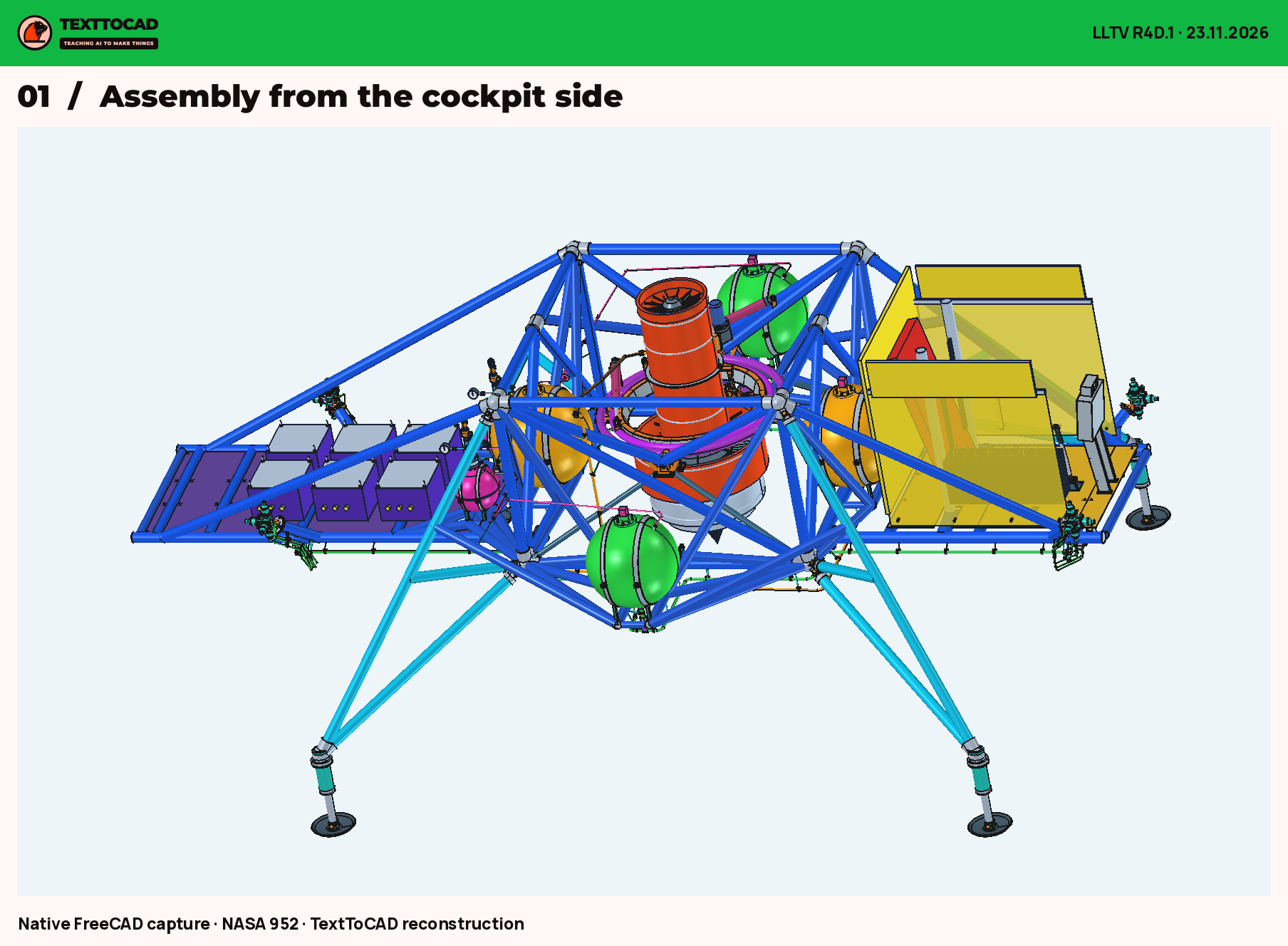
Assembly from the cockpit side
The truss, four landing supports, central CF700 and cockpit appear in their saved configuration.
Engineering atlas · 23 November 2026
Digital reconstruction of the NASA 952 lunar landing trainer. Layout, sections and traceable flight simulation results.
LLTV R4D.1 · 24.11.2026The truss, four landing supports, central CF700 and cockpit appear in their saved configuration.
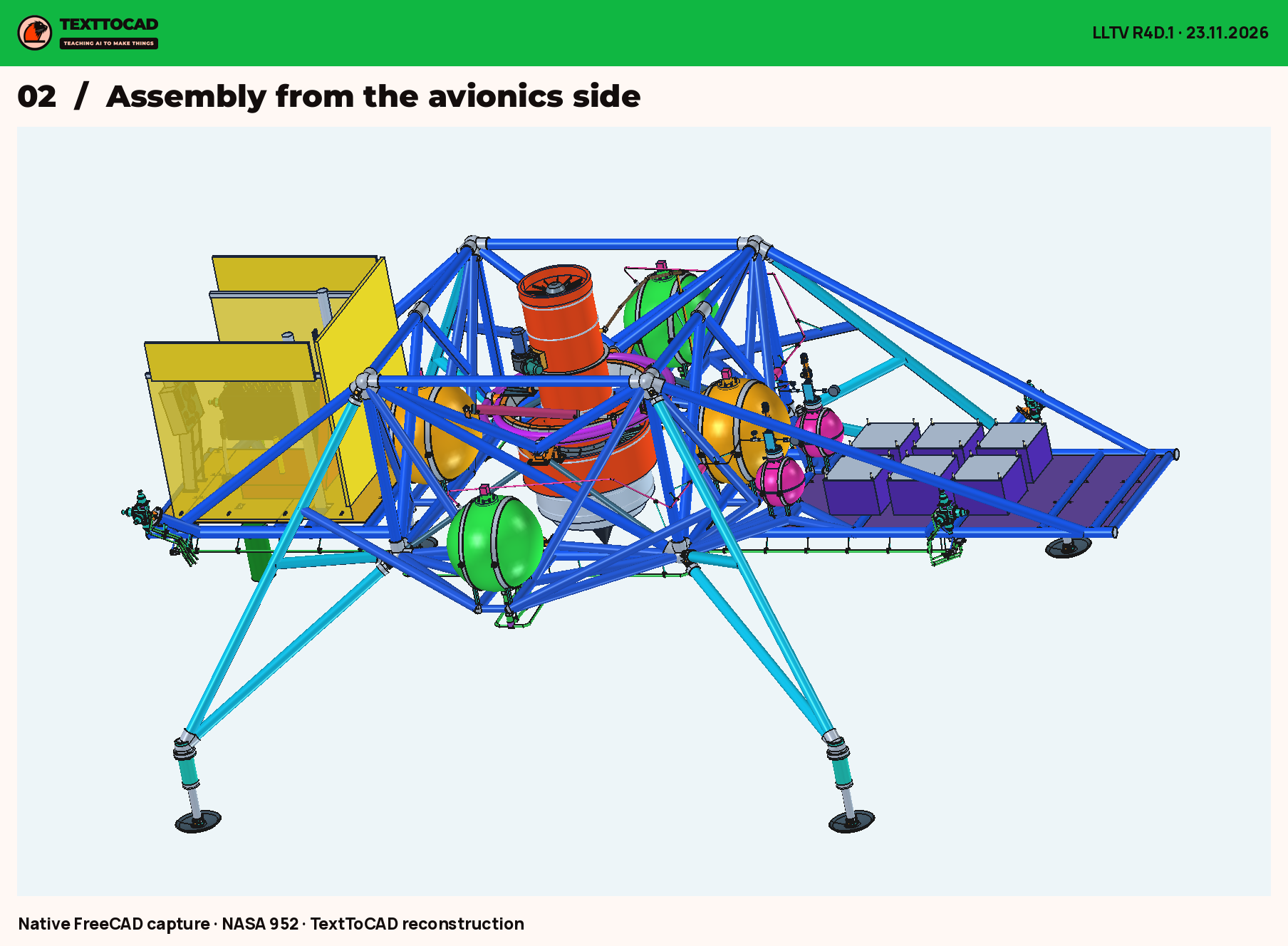
LLTV R4D.1 · 24.11.2026The opposite view shows the equipment deck, engine envelope and outboard RCS clusters.
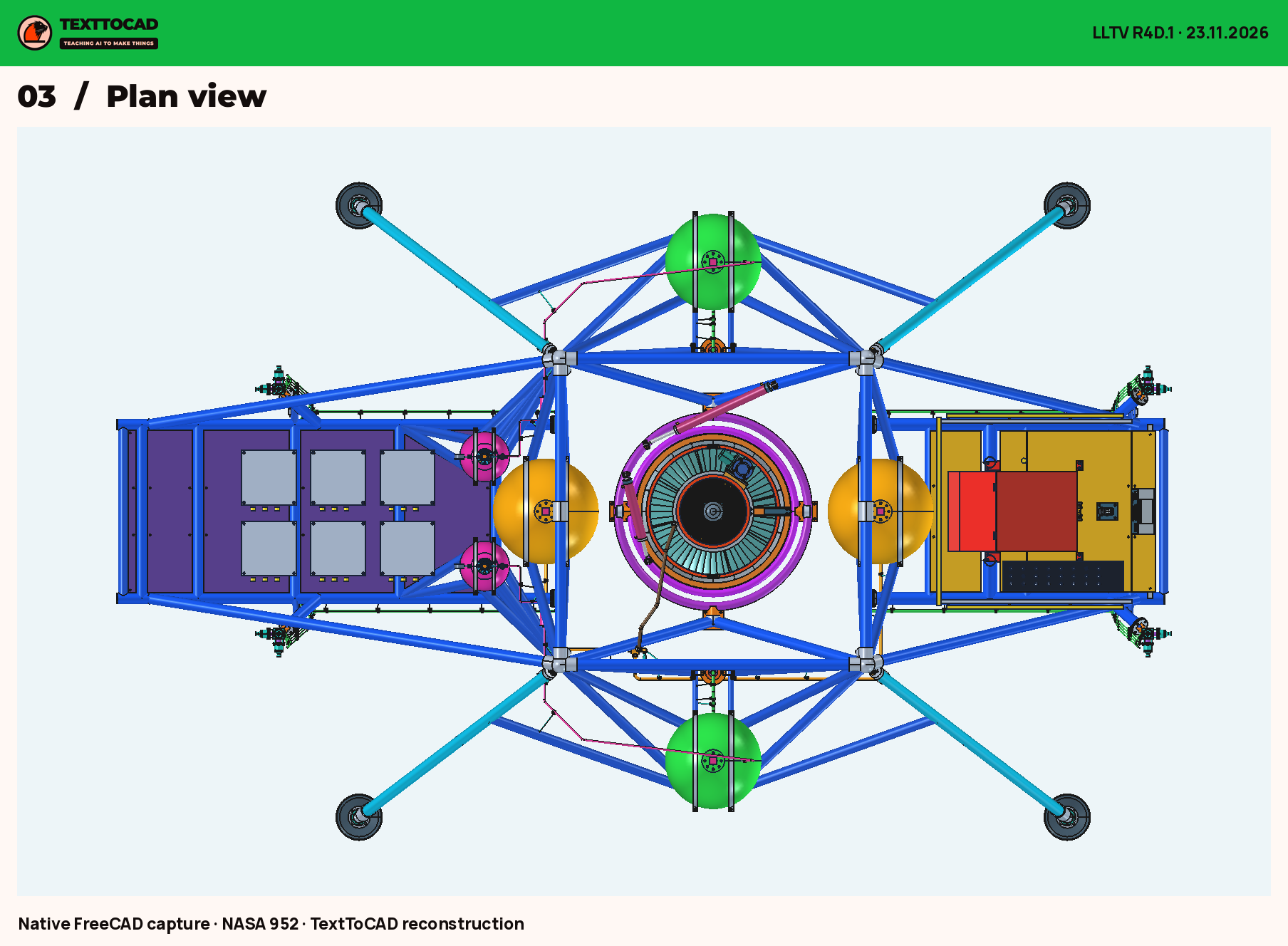
LLTV R4D.1 · 24.11.2026The tank, pilot and electronics locations are visible relative to the centreline.
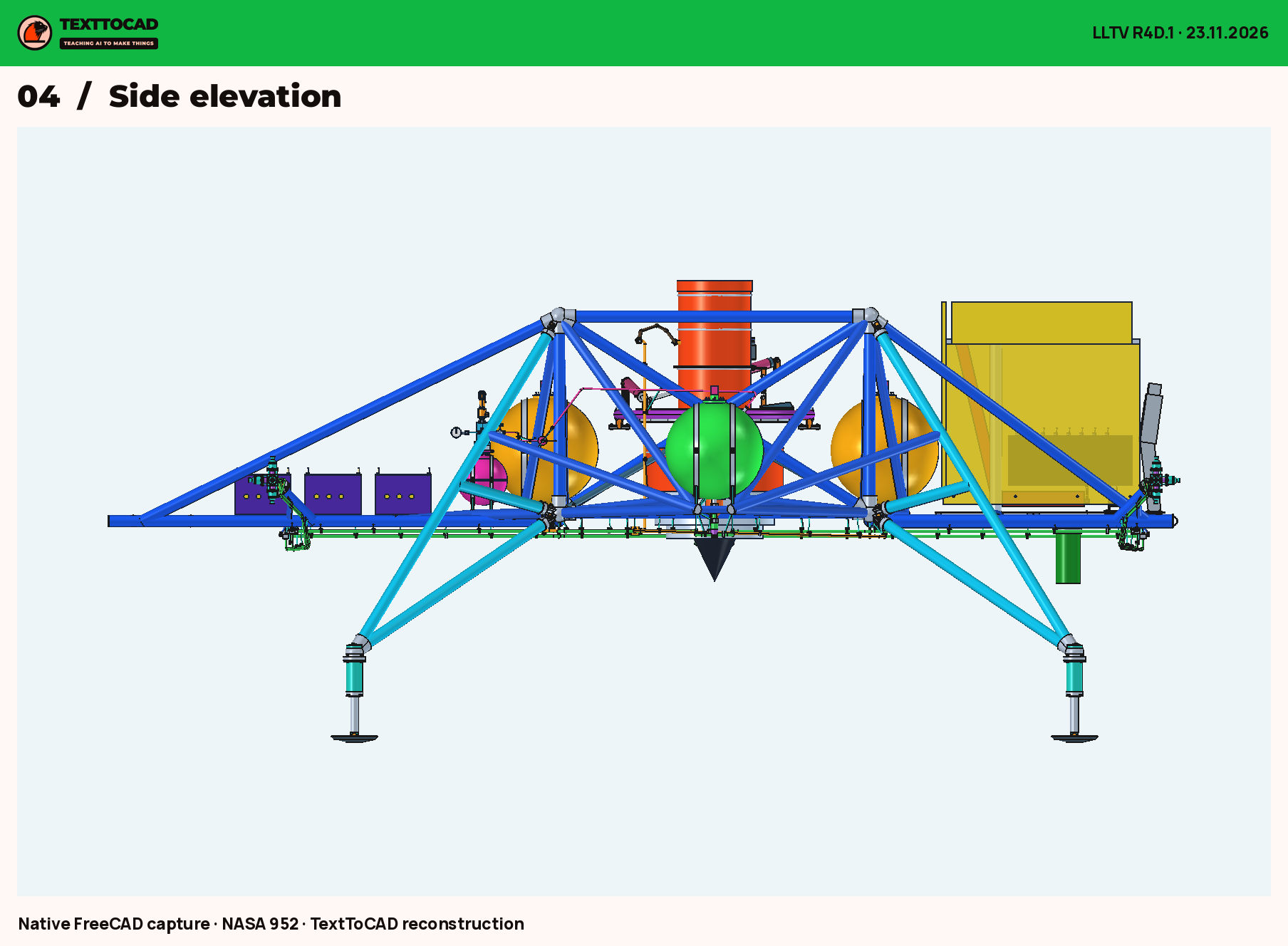
LLTV R4D.1 · 24.11.2026The cockpit and engine are shown relative to the truss and landing pads.
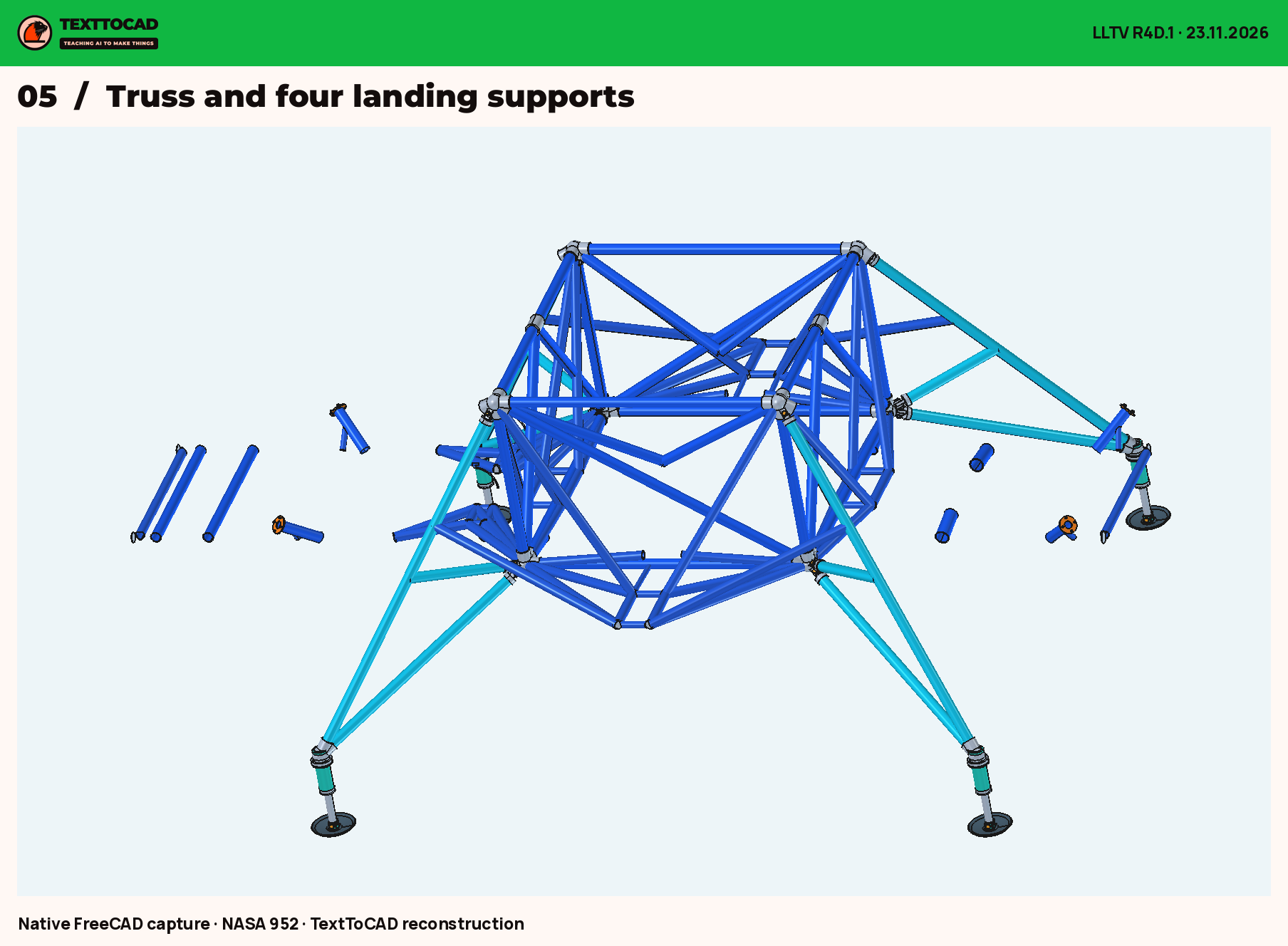
LLTV R4D.1 · 24.11.2026First layout layer. Camera and scale match sheets 06 and 01.
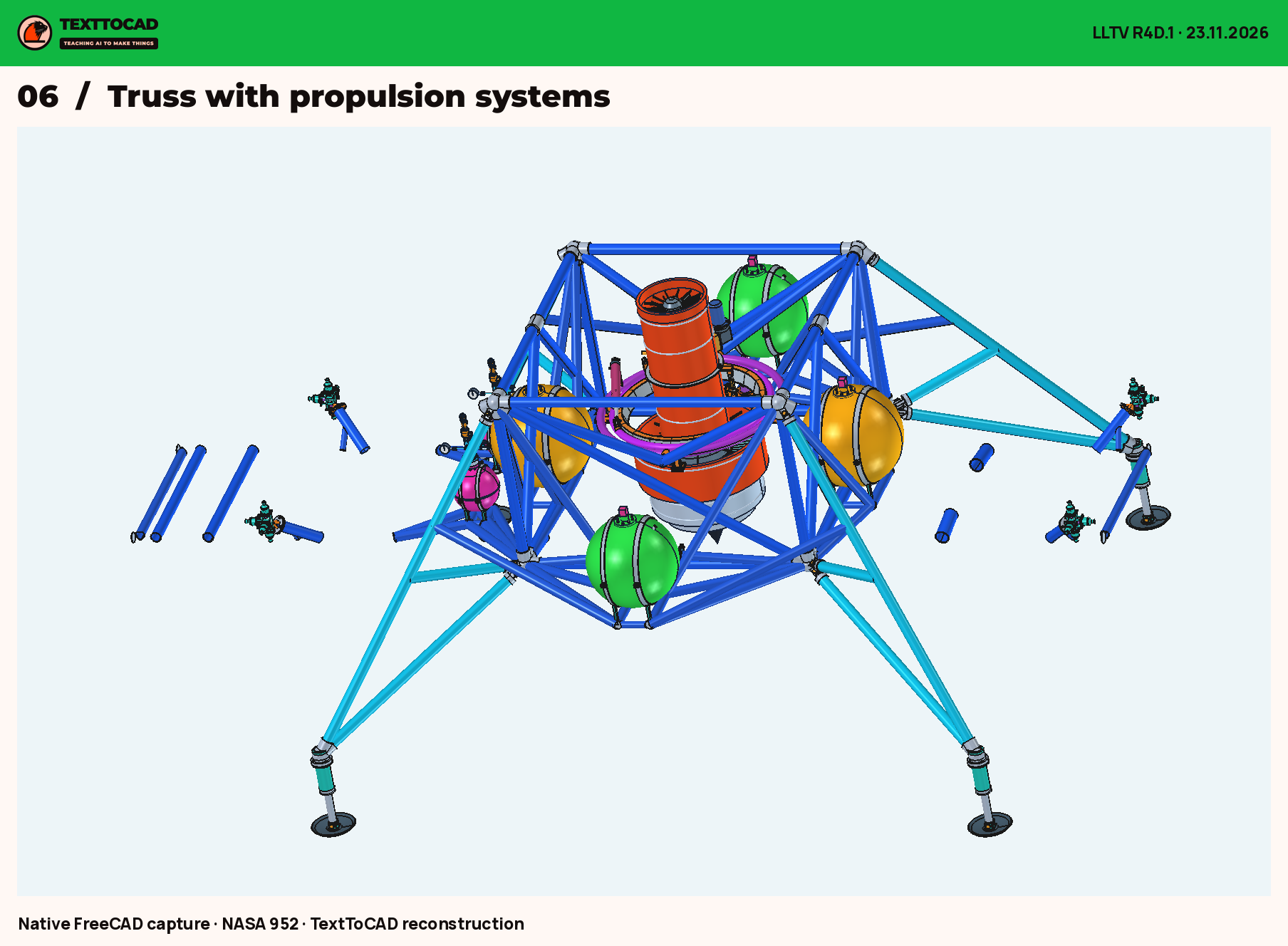
LLTV R4D.1 · 24.11.2026The same view adds the gimballed CF700, tanks, lift engines and RCS. See sheet 01 for the complete assembly.
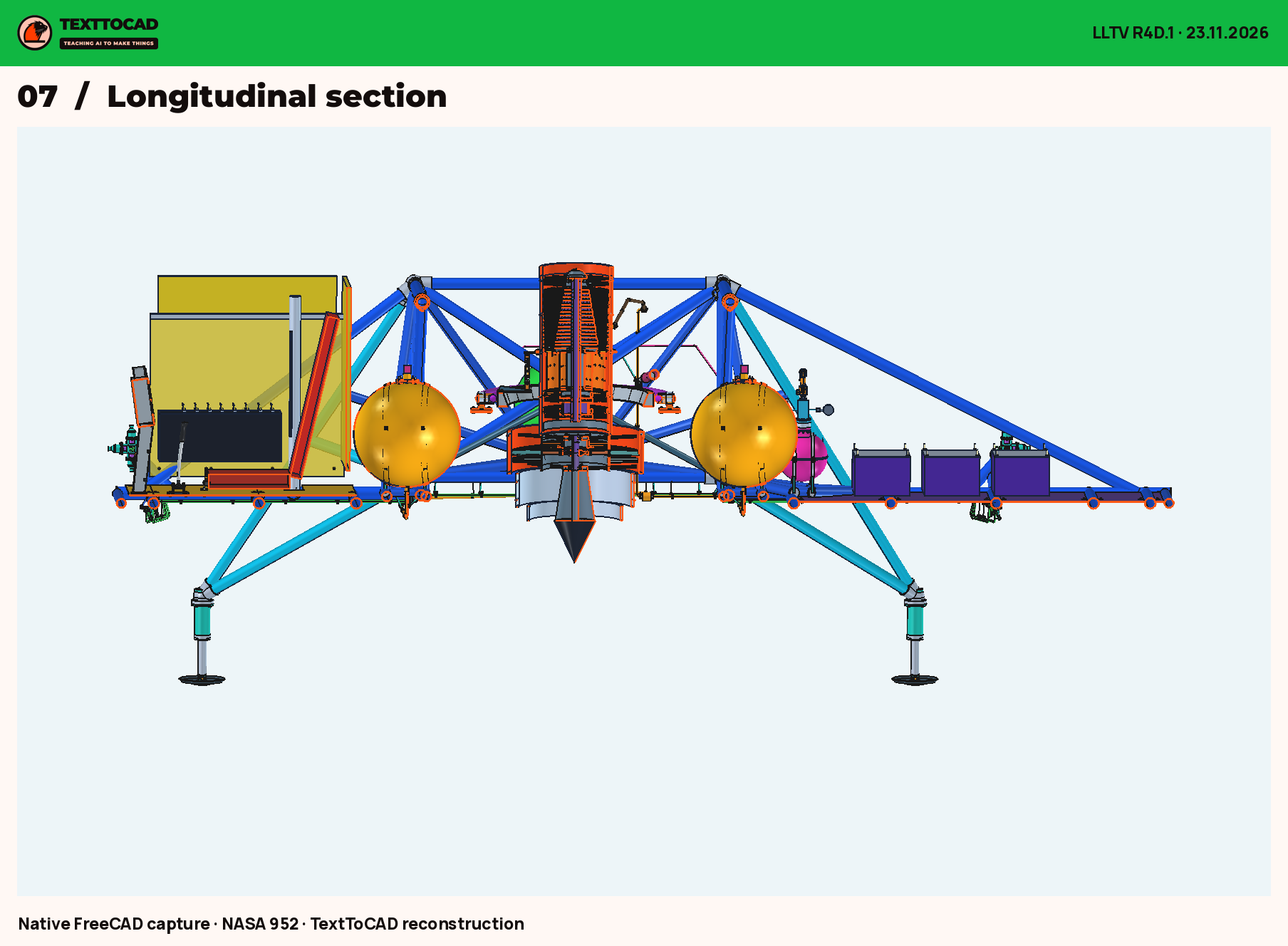
LLTV R4D.1 · 24.11.2026Y = 0 mm, retaining Y ≤ 0. Orange lines trace intersections of selected bodies with the plane.
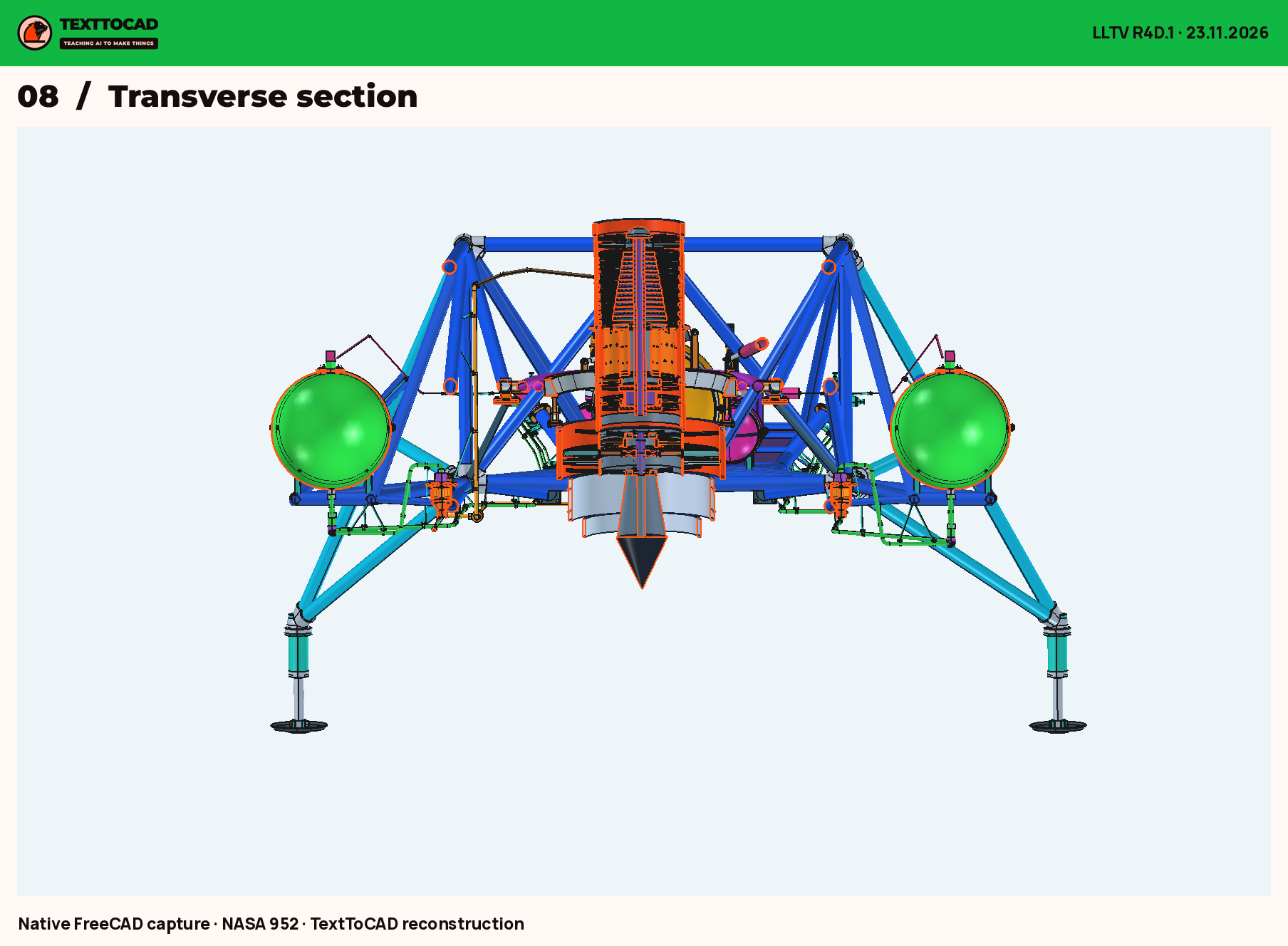
LLTV R4D.1 · 24.11.2026X = 0 mm, retaining X ≤ 0. The cut passes through the central assembly and shows the transverse layout.
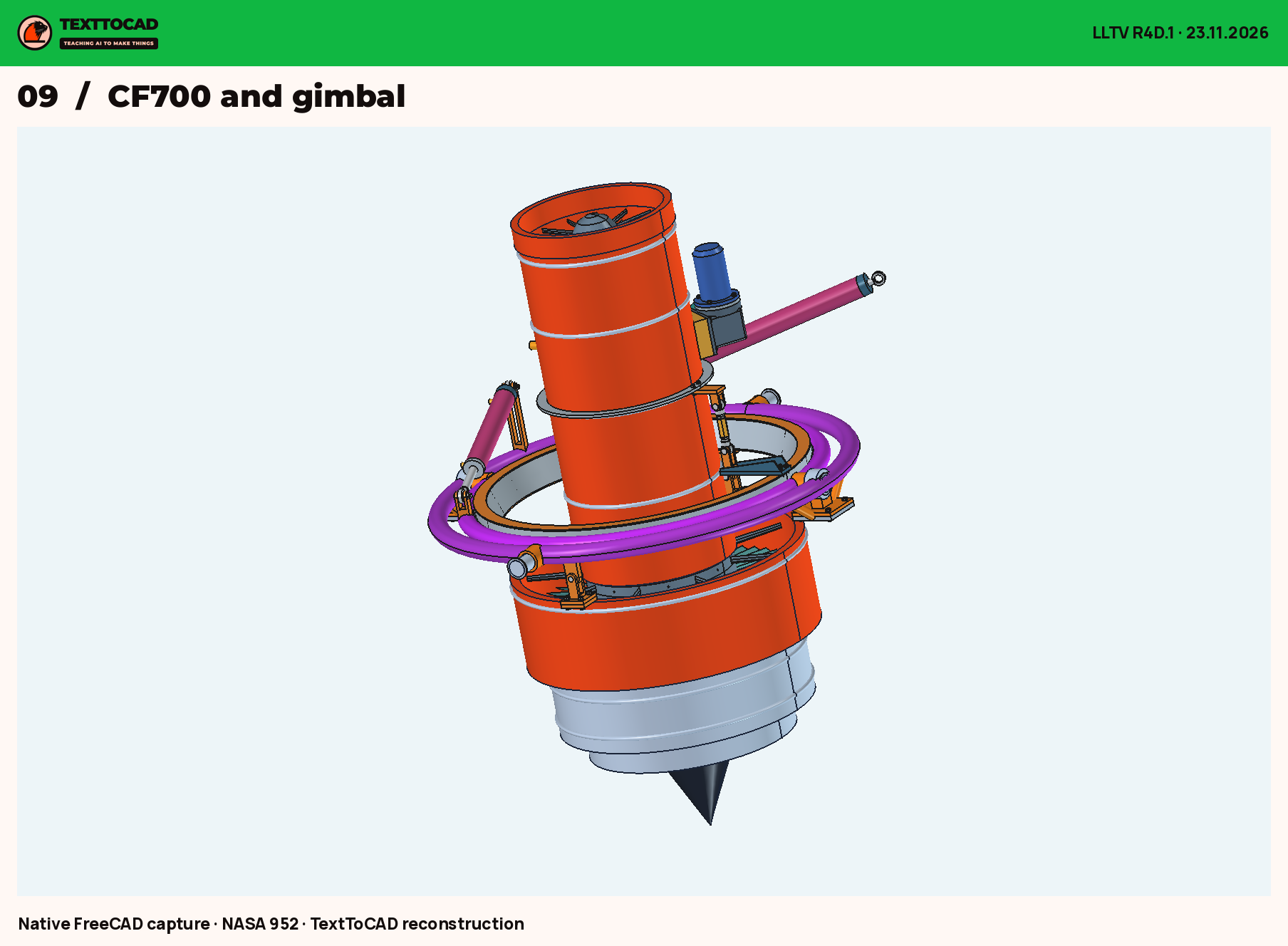
LLTV R4D.1 · 24.11.2026The engine is isolated with its gimbal rings. Native part colours and positions are retained.
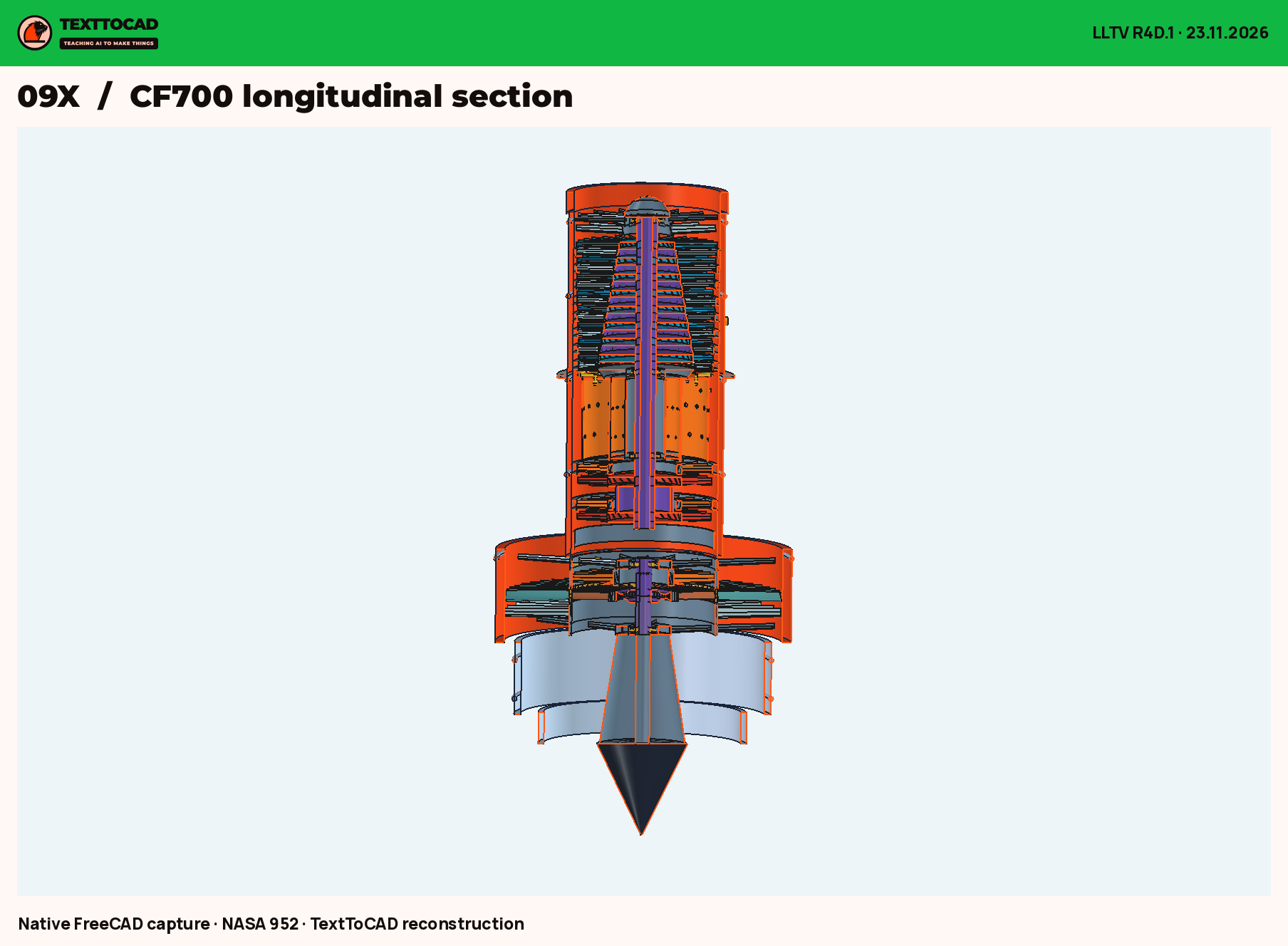
LLTV R4D.1 · 24.11.2026The Y = 0 mm plane crosses the engine axis to reveal its internal flow paths and rotor arrangement.
Follow the flow and thrust step by step
Loading the local 3D model…
The Y = 0 cut opens the stationary parts. The rotors remain whole and turn independently. The angles describe geometric motion. Geometry provenance
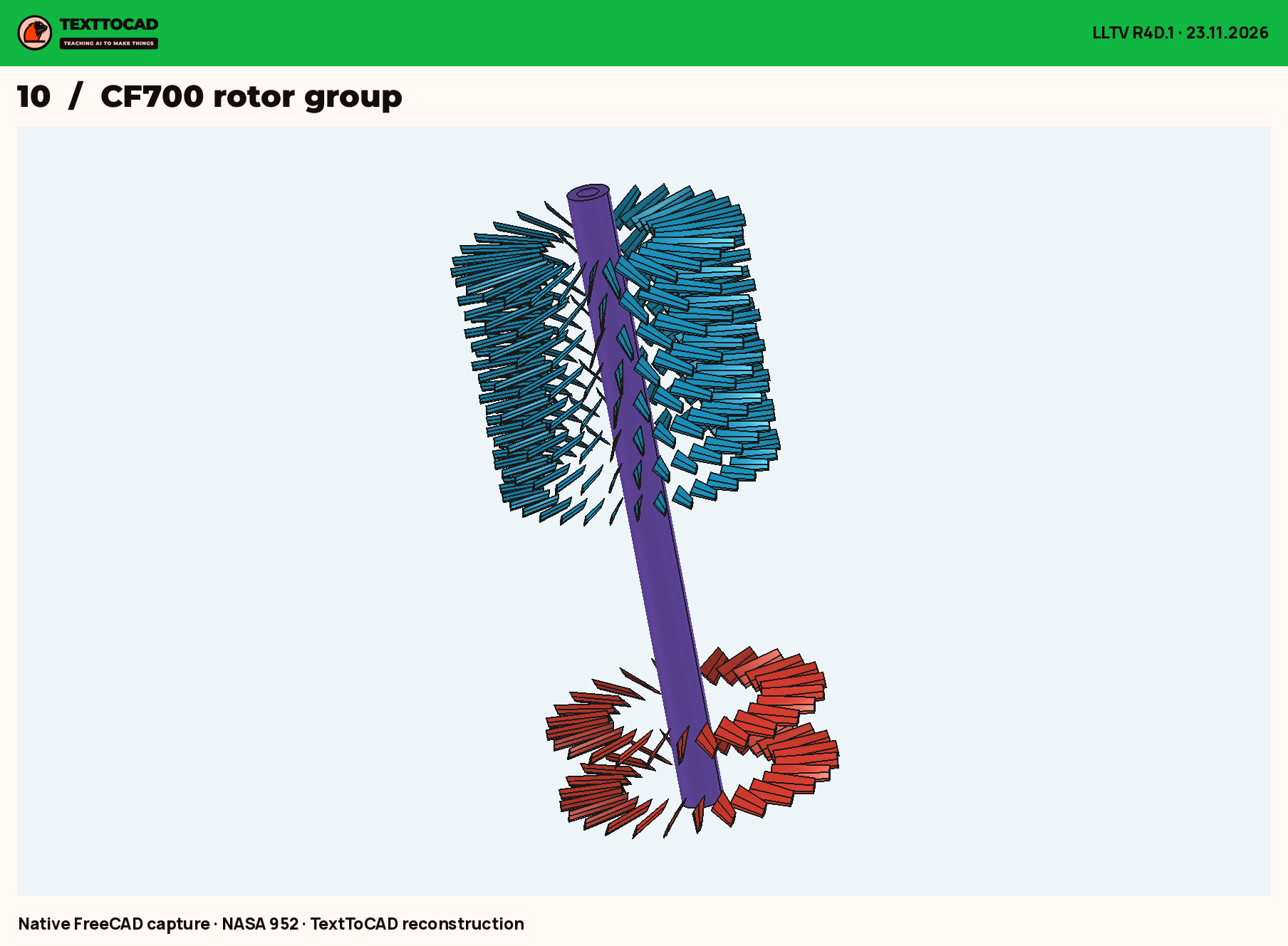
LLTV R4D.1 · 24.11.2026Rotors, shaft and selected rotating assembly components are isolated from the R4D.1 reconstruction.
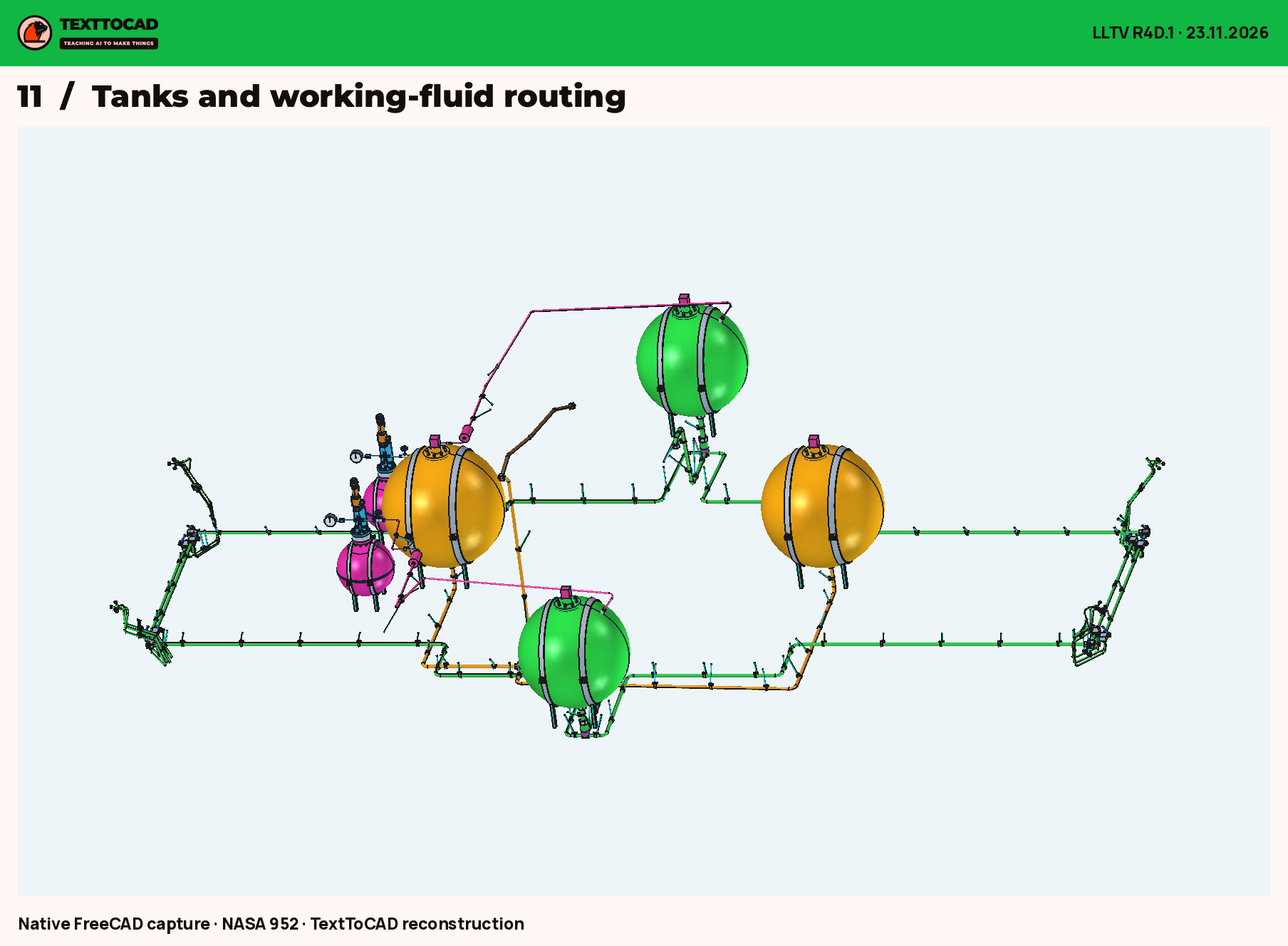
LLTV R4D.1 · 24.11.2026The tanks and routing are isolated, including the JP supply and lift-engine feed.
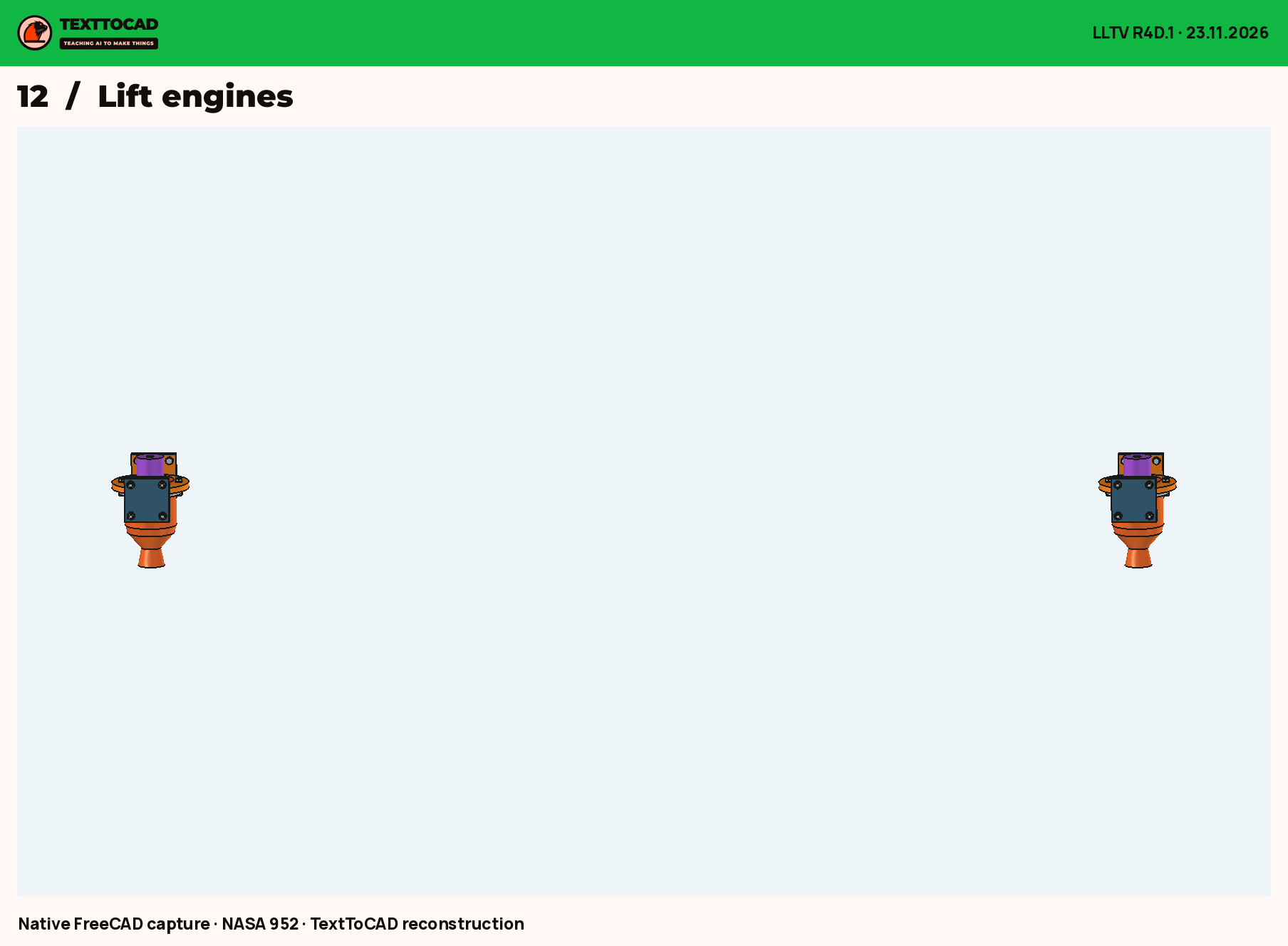
LLTV R4D.1 · 24.11.2026The two lift assemblies are shown in their installed positions. A close-up of one assembly follows.
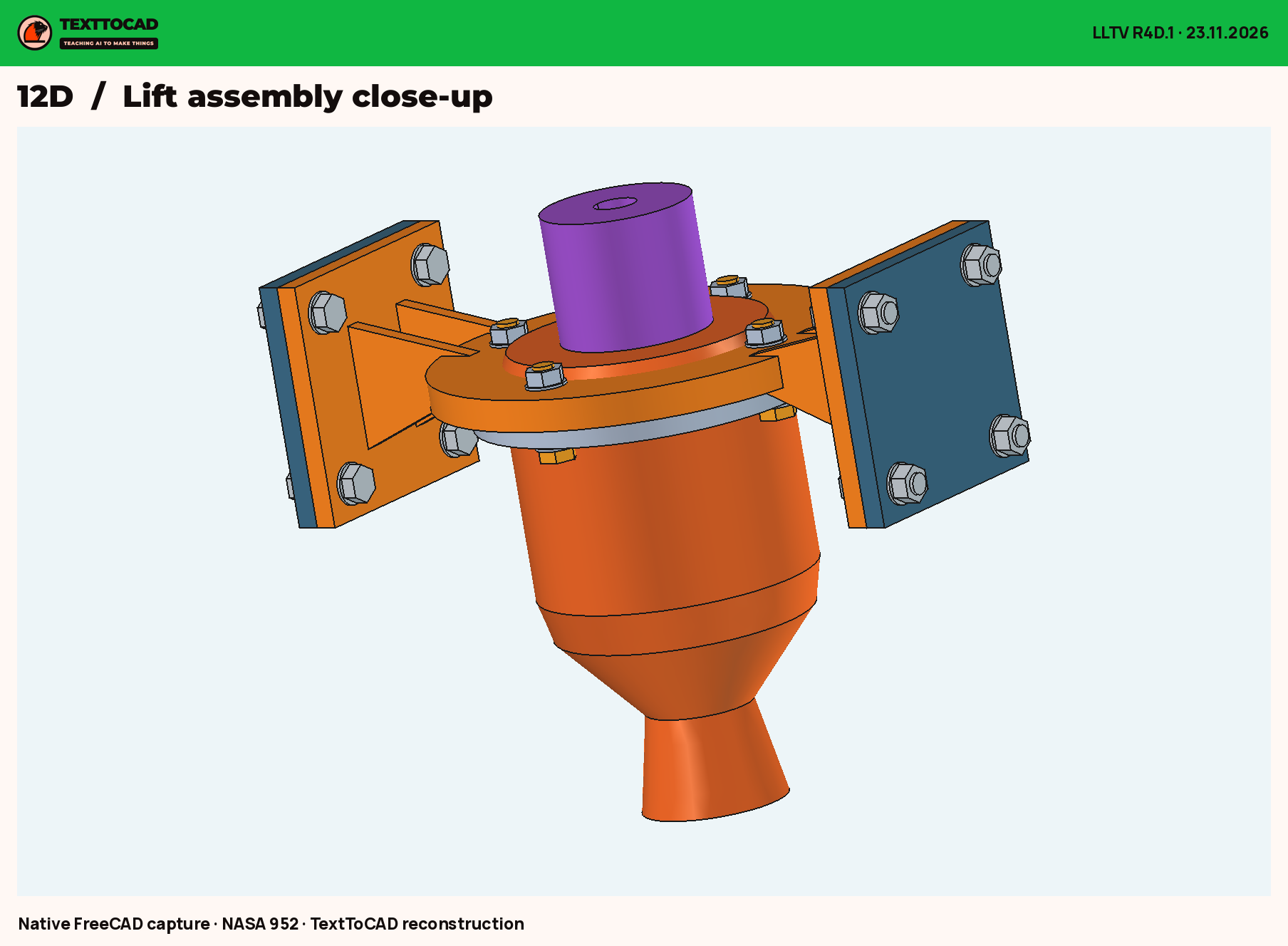
LLTV R4D.1 · 24.11.2026The left lift assembly and its mounting interface are isolated.
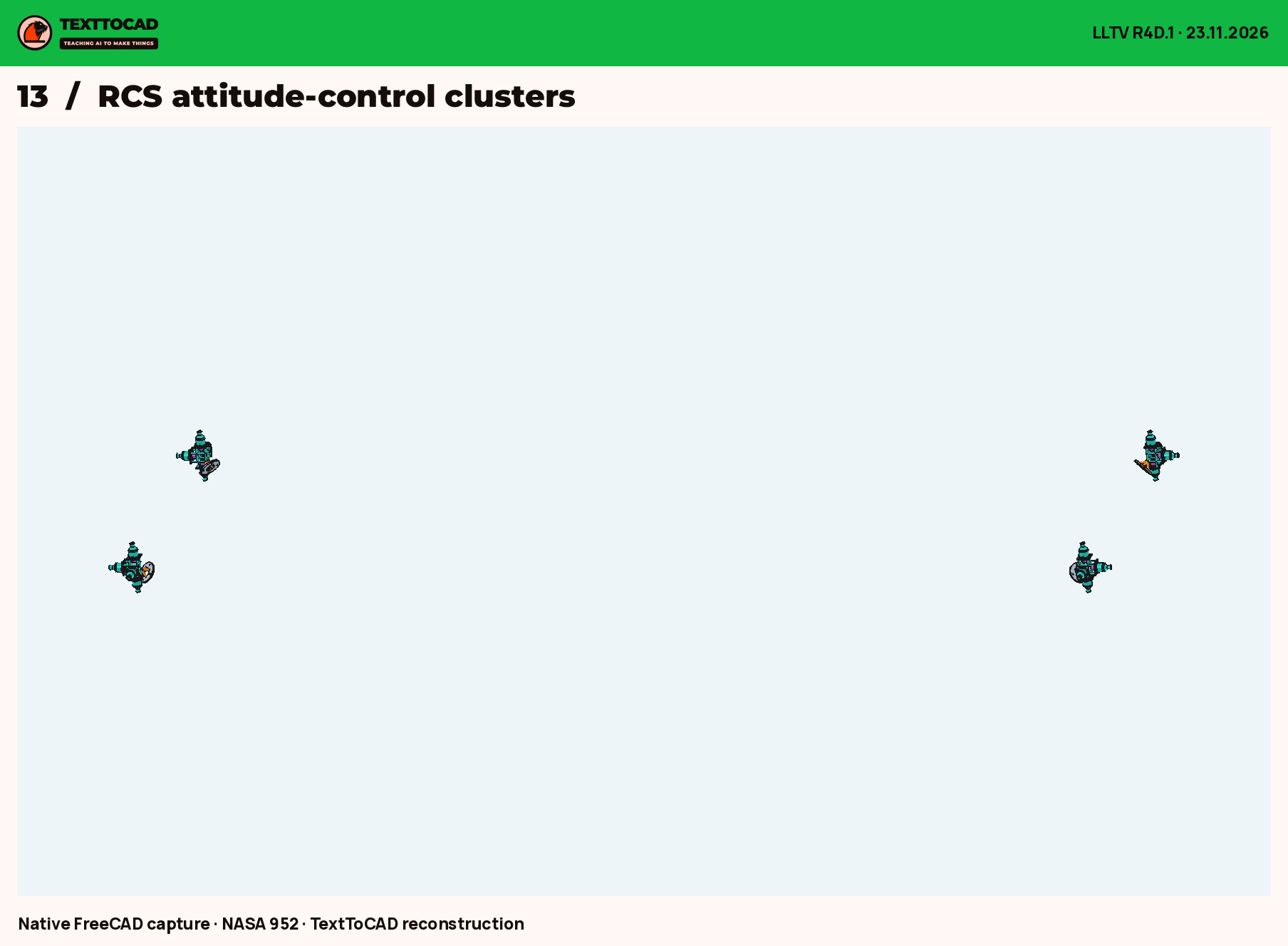
LLTV R4D.1 · 24.11.2026Relative positions of the four clusters. The detail shows the front-right cluster.
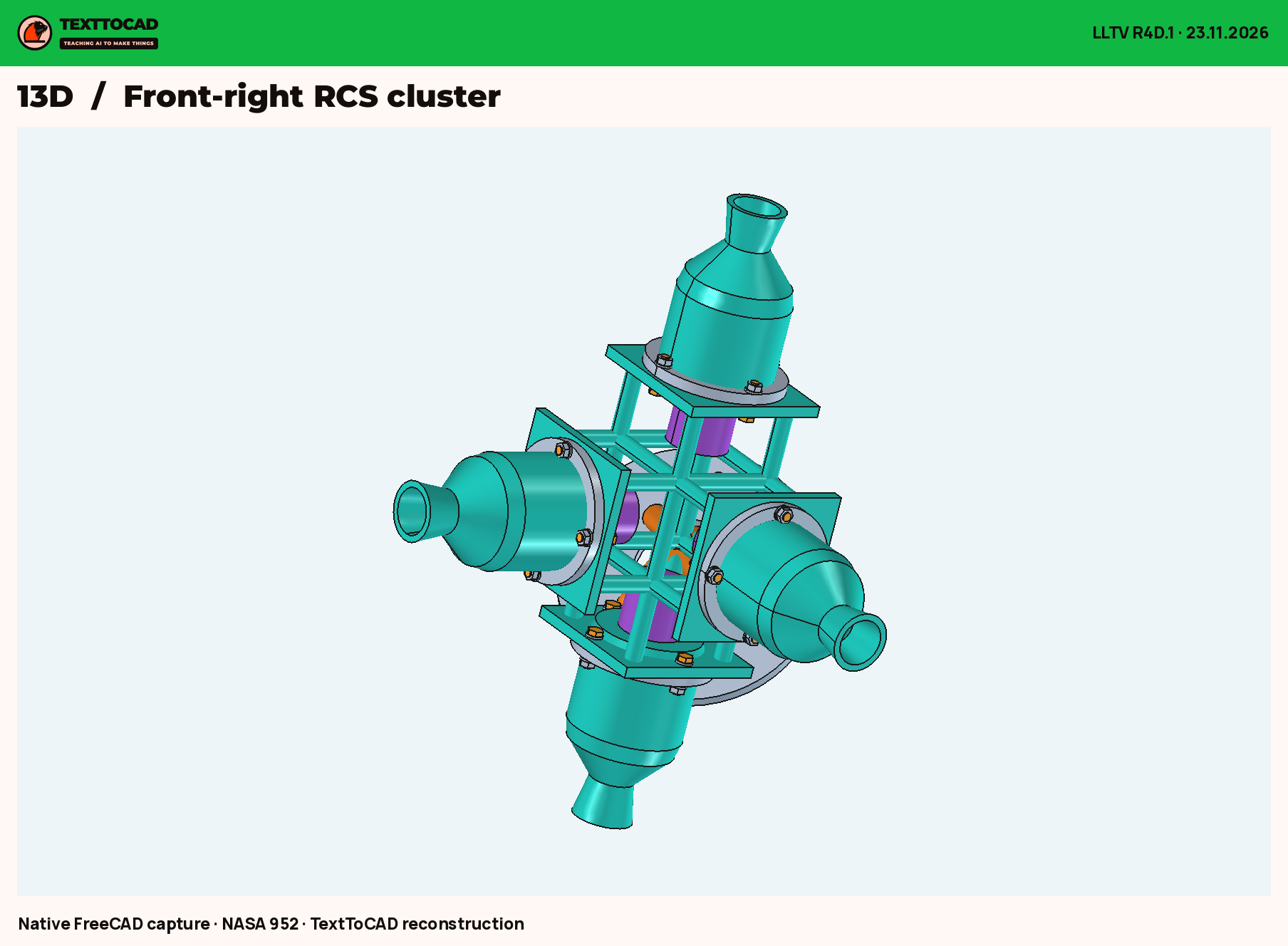
LLTV R4D.1 · 24.11.2026A close view of the attitude-control chambers and mounting cage in their saved positions.
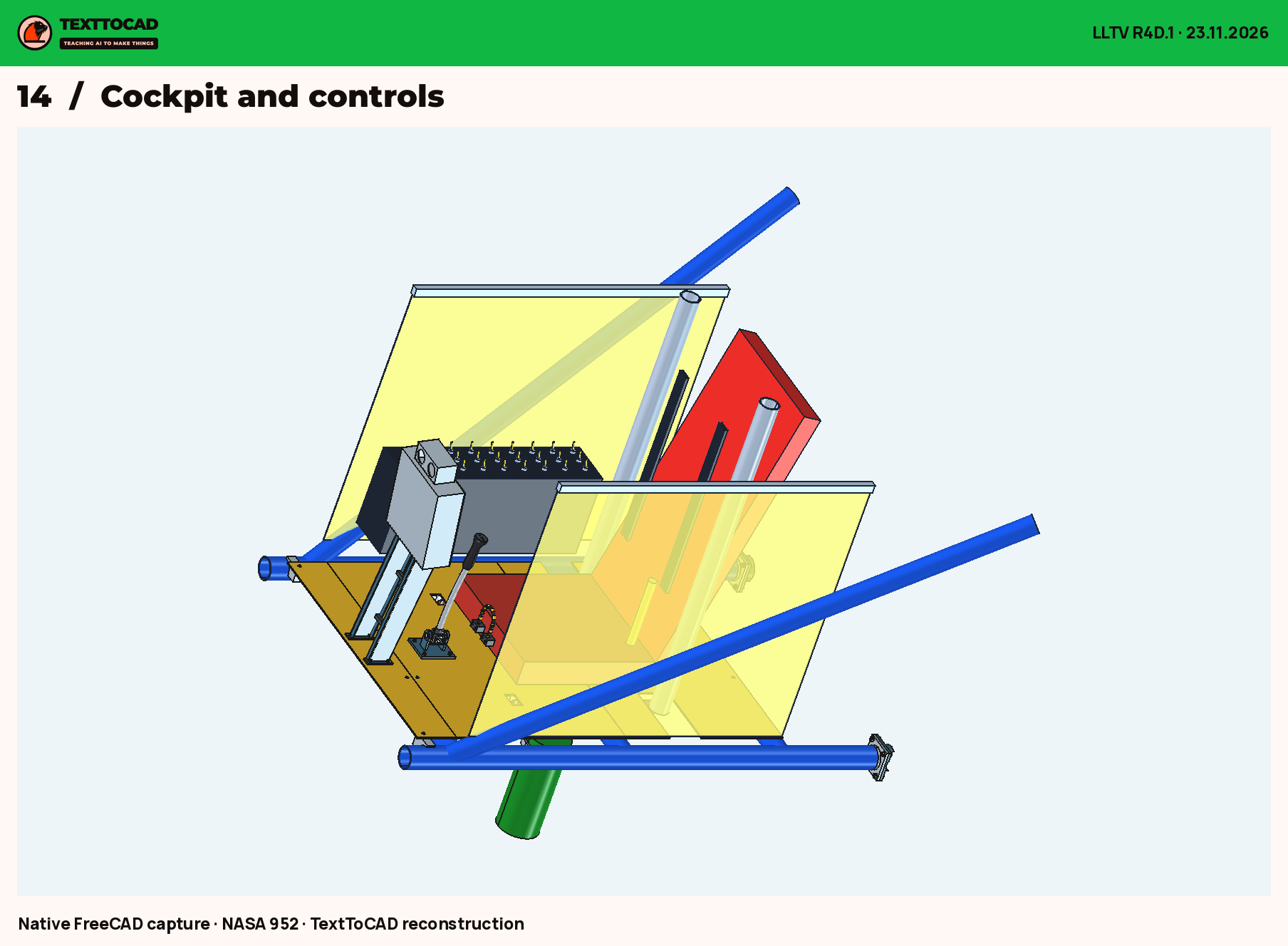
LLTV R4D.1 · 24.11.2026The pilot station, seat, instrument panel and control stick are isolated.
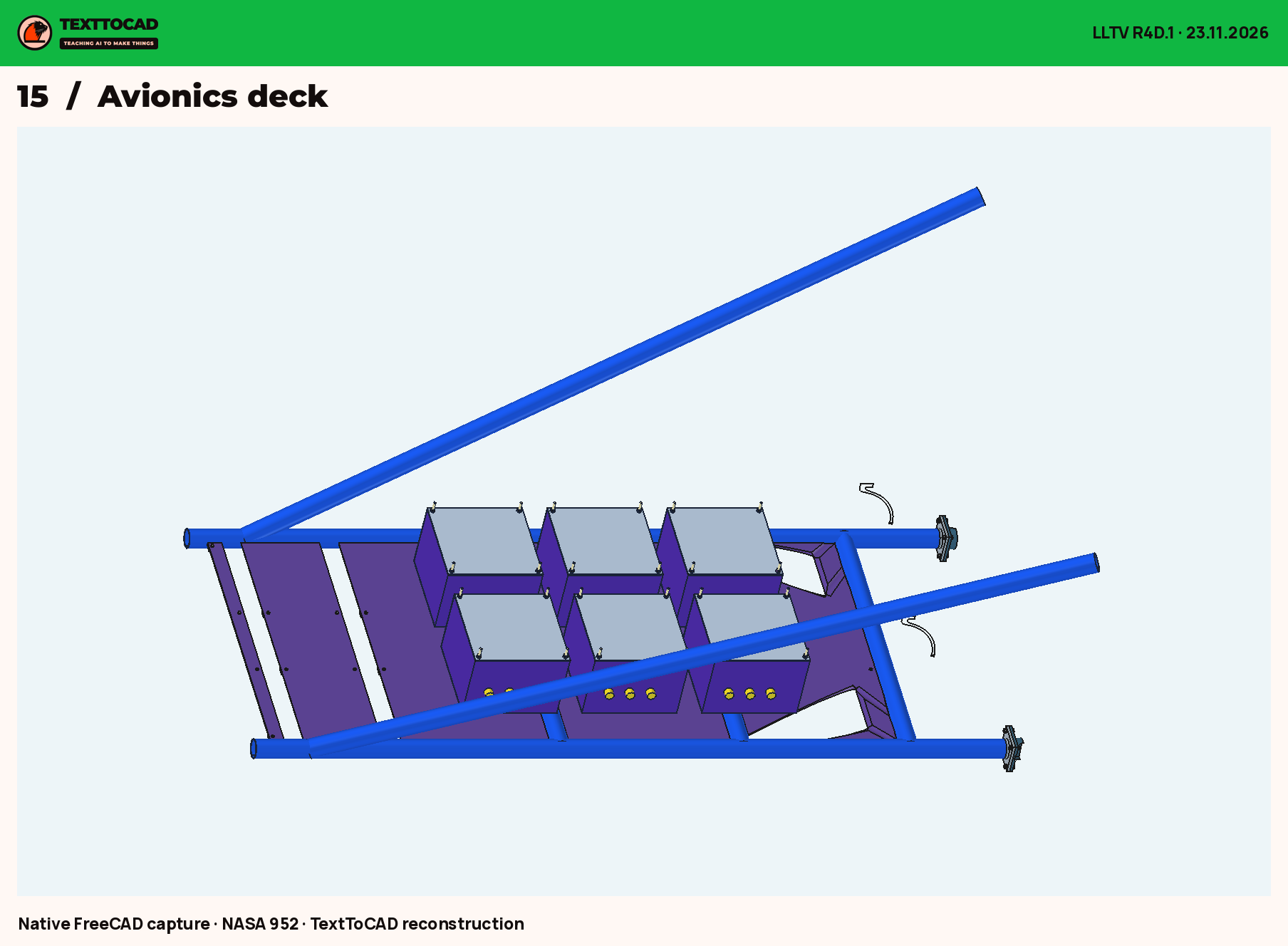
LLTV R4D.1 · 24.11.2026A dedicated view of the avionics platform and equipment housings.
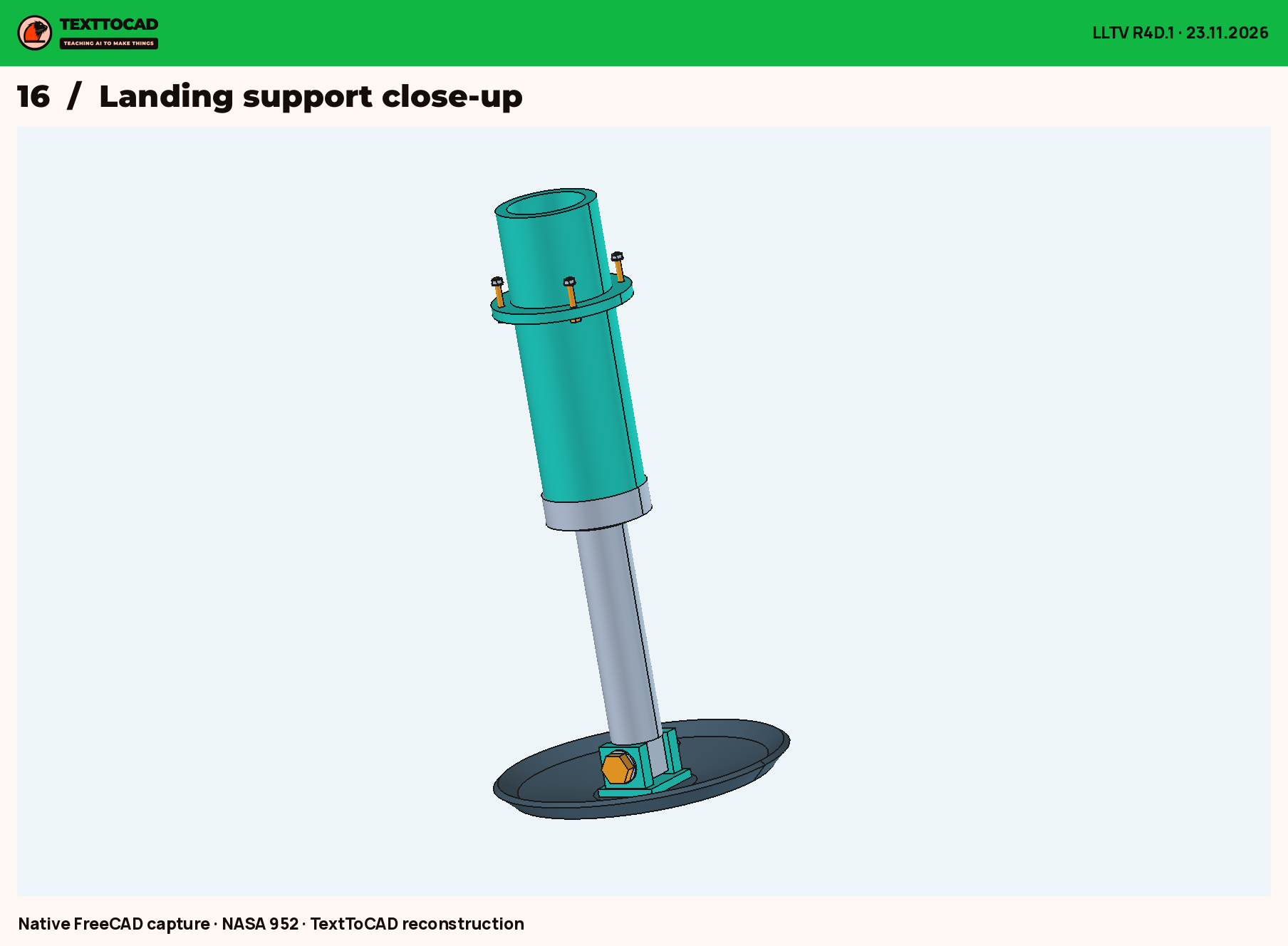
LLTV R4D.1 · 24.11.2026The front-right strut assembly and landing pad are shown in their saved positions.
LLTV R4D.1 · 24.11.2026A guided tour on the LLTV 3D assembly. Start with the whole vehicle or choose a system.
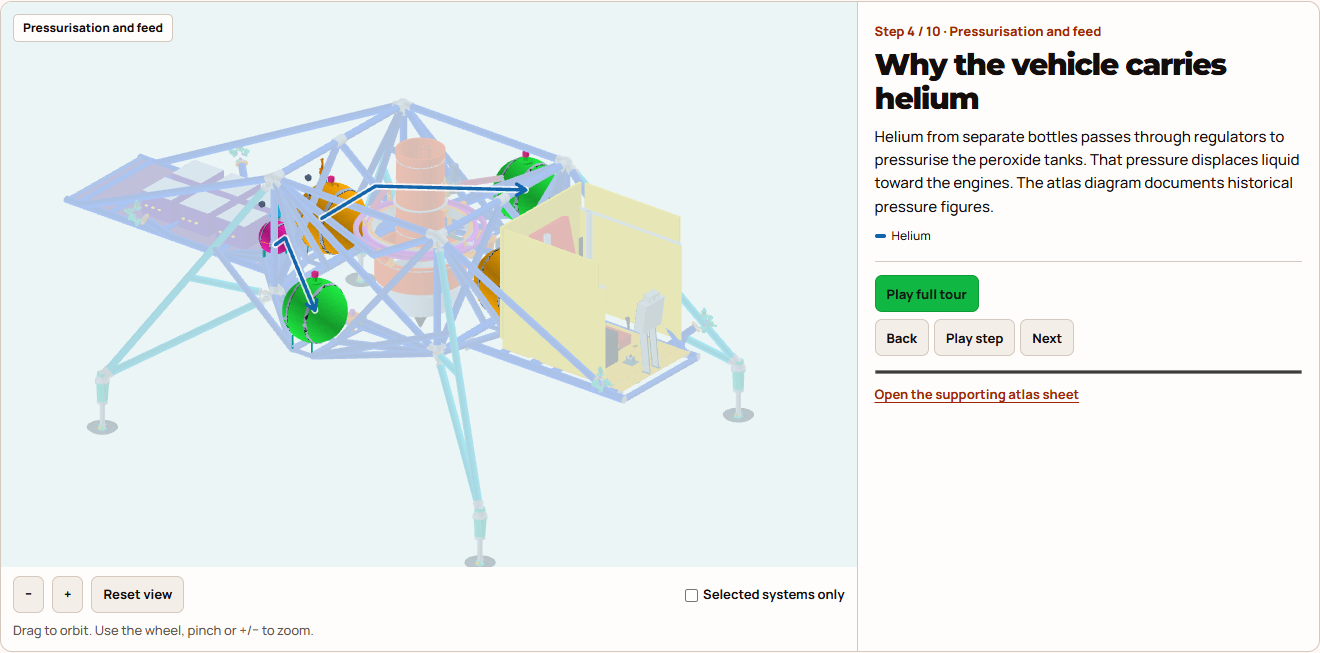
Six chapters and ten steps. Rotate the assembly, highlight the selected systems and trace flows, commands and forces. Each step links to the supporting atlas sheet.
LLTV R4D.1 · 24.11.2026Camera and visibility come from the file. A separate process captured the view before any camera or visibility changes.
LLTV R4D.1 · 24.11.2026Mass properties use R4D.1 solids, assumed densities and modelled consumables.
| Configuration | Mass, kg | CoM X / Y / Z, CAD mm | Principal moments, kg·m² |
|---|---|---|---|
| Vehicle without pilot | 1 173.77 | -126.9 / -1.8 / -283.1 | 952.8 / 2 763.1 / 3 066.3 |
| With pilot, unfilled | 1 252.77 | 4.7 / -1.7 / -265.2 | 957.1 / 3 093.4 / 3 394.1 |
| Partial fill | 1 510.81 | 3.2 / -1.4 / -278.4 | 1 315.8 / 3 222.9 / 3 876.3 |
| Full modelled load | 1 768.07 | 2.7 / -1.2 / -256.0 | 1 678.4 / 3 354.9 / 4 357.7 |
Neutral gimbal pose and CAD Z up. The estimate includes a 79 kg pilot assumption. Mass and inertia come from the model; independent weighing is pending.
Mass register and full tensorLLTV R4D.1 · 24.11.2026Examples from reproducible 6DoF scenarios for the single R4D.1 model.
| Scenario | Airborne, s | Landing offset, m | Excess over reserve, kg JP / H₂O₂ |
|---|---|---|---|
| Translation up to 1 m/s, calm | 97.76 | 67.0 | 184.99 / 1.02 |
| 3 m/s, calm, go-around | 92.76 | 87.0 | 185.35 / 2.07 |
| 3 m/s, 2 m/s headwind, go-around | 94.75 | 47.0 | 184.86 / 0.20 |
| Crosswind gusts to 3.5 m/s with circuit | 86.74 | 16.5 | 185.54 / 1.29 |
Range is the landing offset. The total horizontal track in the gust-and-circuit case is 32.3 m. Reserve is evaluated at descent start or at first approach, depending on the case.
Open the scenario in the 3D replay · Numerical record · Technical video (RU)LLTV R4D.1 · 24.11.2026Archived LLRV results inform the R4D.1 model. Dedicated synchronized telemetry is needed for NASA 952.
| Data | Scope | Source |
|---|---|---|
| NASA 952 | Historical sources confirm the CF700-2V and gimbal. | PHO-TR474 |
| LLRV gimbal ground test | 0.4 s rise time in the closed-loop test. | NASA TN D-3689, Fig. 16 |
| LLRV lift and control | Historical engine data, with calibration pending for R4D.1 transients. | NASA TN D-3023, Table IV |
| R4D.1 simulation | 6DoF, assumed aerodynamics and discrete ground contact. Actual-flight accuracy remains undetermined. | mission_summary.json |
LLTV R4D.1 · 24.11.2026Status against the simulation work plan, with the applicable scope of CAD and numerical results.
| Work-plan item | Check | Current result and remaining work |
|---|---|---|
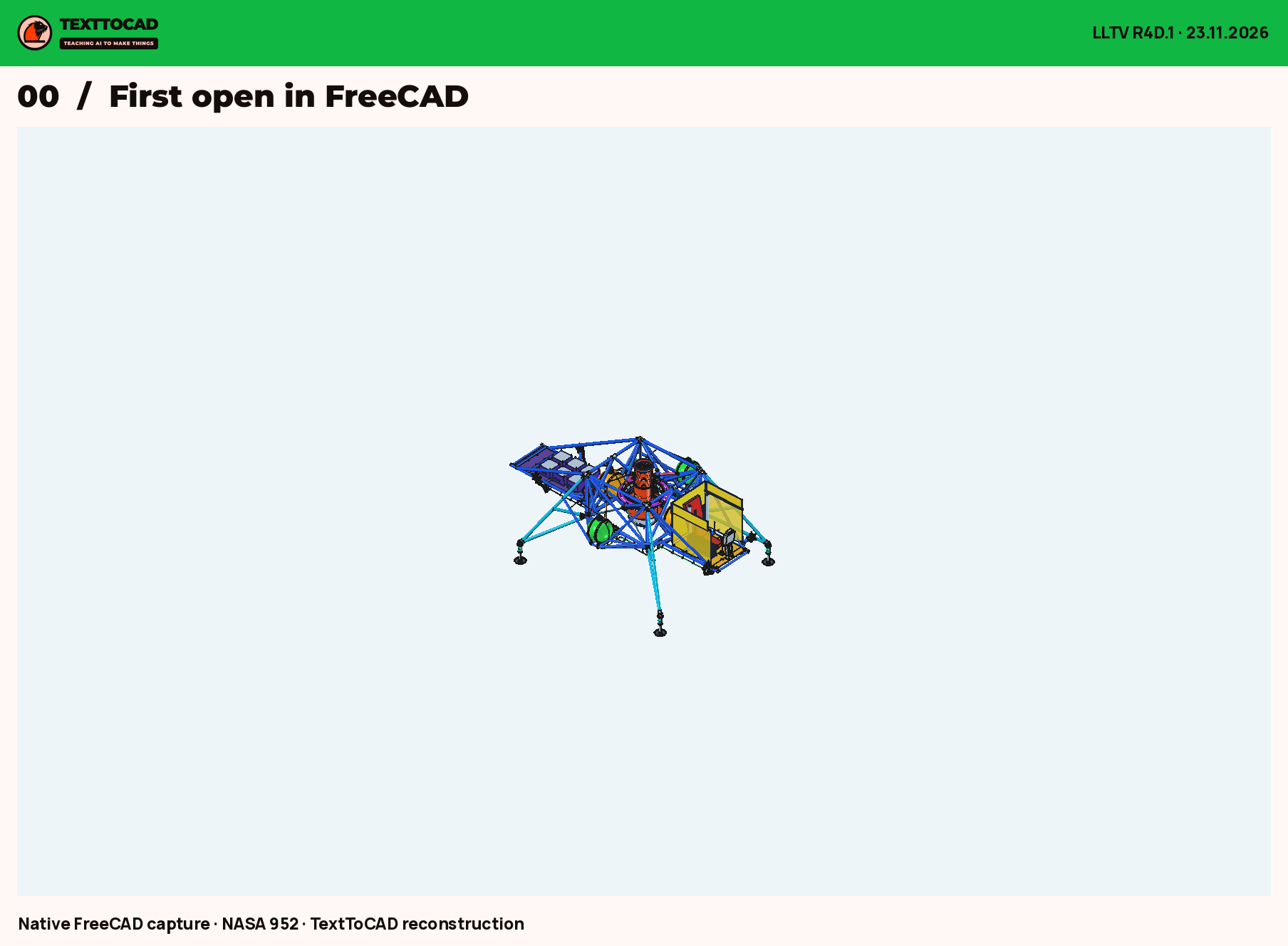
| Т01 / Т19 | Configuration, axes and geometry provenance | Assembly, SHA-256 and first-open image. |
| Т08 | Mass properties | Native estimate complete. Weighing, inertia and centre-of-mass validation are open. |
| Т06 / Т07 / Т12 | Actuator dynamics | Historical benchmarks collected. Independent identification of response and limits remains open. |
| Т08 / Т04 / Т11 | Closed-loop flight model | Full mission, wind and go-arounds can be replayed. Measurement and independent telemetry validation remain open. |
Requirements and simulation work plan · Shot map, required parts and SHA-256
LLTV R4D.1 · 24.11.2026Archived engine architecture and verification studies from the same revision.


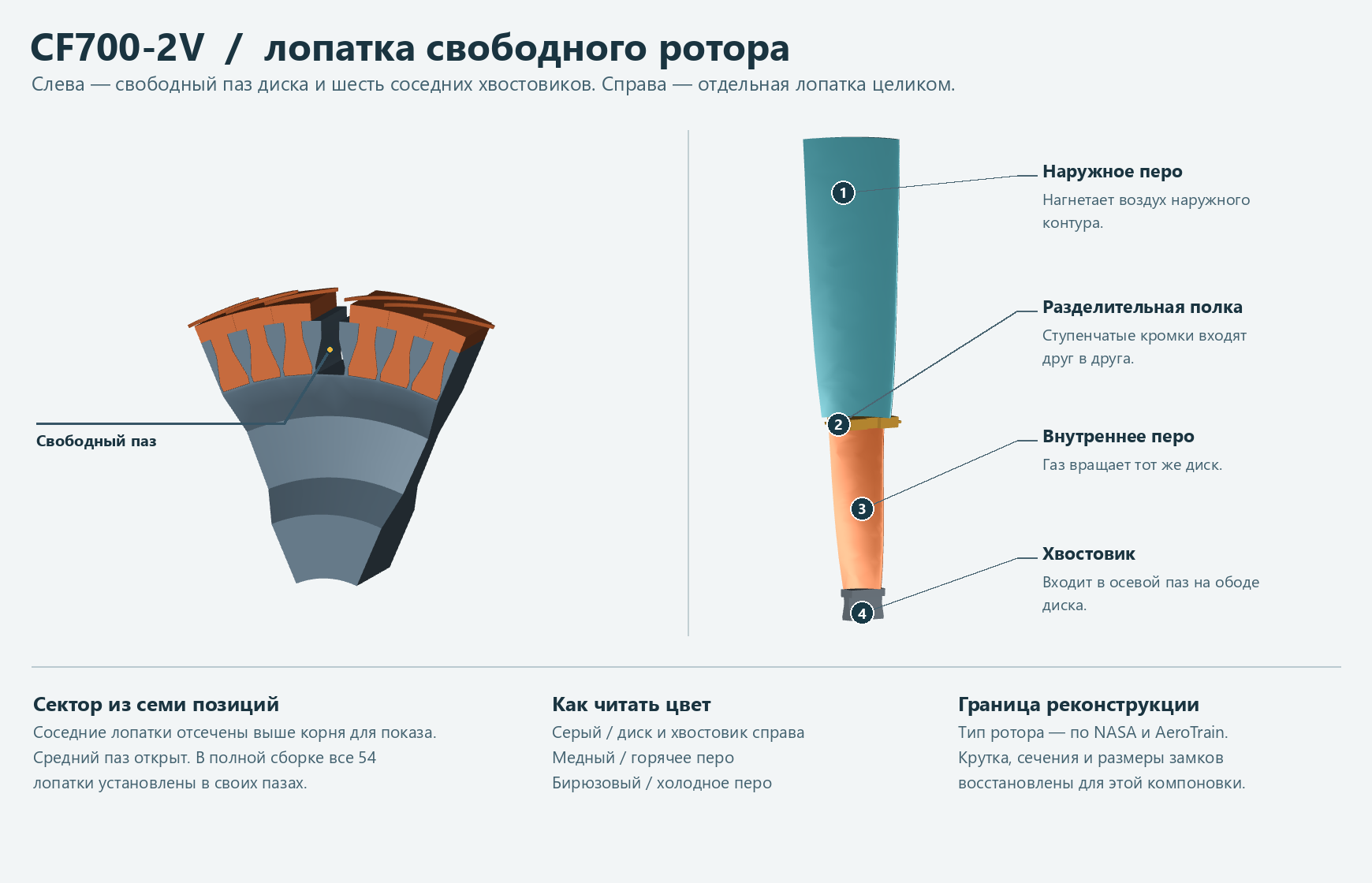
The archived check records 154 engine features and 135 valid section objects. The source register books the engine as a 285 kg equivalent mass.
Archived CF700 interactive study (RU) · Detailed CAD cutaway · Verification recordLLTV R4D.1 · 24.11.2026Selected numerical scenarios from the original propellant study.
| Simulated scenario | Total cycle, s | JP, kg | H₂O₂, kg |
|---|---|---|---|
| Takeoff and landing in place | 43 | 9.389 | 99.245 |
| 10 s extra hover | 53 | 12.007 | 127.735 |
| 360° yaw turn | 78 | 18.343 | 197.076 |
| 8 m translation | 47 | 10.438 | 112.087 |
| Translation, climb and 30° turn | 57 | 13.037 | 140.037 |
Duration and propellant usage cover the whole cycle, including the portion on the ground. The 360° simulated turn is about the yaw axis.
Phase CSV · Manoeuvre CSVLLTV R4D.1 · 24.11.2026A single index for numerical benchmarks, geometric checks and manufacturing estimates.
| Package | Contents | Files |
|---|---|---|
| Numerical test bench | Test programme and reproducible numerical benchmarks, including NASA NESC. Scope is tied to the archived assumptions. | Programme (RU) · NESC |
| CF700 geometry and CAD exchange | Neutral-pose geometry intersection check and STEP round-trip record. | CAD · AP242 |
| Working fluids | Dated report with JP and H₂O₂ usage by phase and manoeuvre. | Report (RU) |
| Manufacturing and development | Archived cost comparison with its original assumptions. The layout sheets cover LLTV. | CSV · JSON |
LLTV R4D.1 · 24.11.2026Select a component on the functional diagram.
Helium → H₂O₂ tank pressurization → liquid peroxide → lift engines and RCS
See branch activity in the 3D replay
Functional diagram. Bell documents LLTV pressurization. Chamber figures come from the earlier LLRV. Individual line pressures on NASA 952 are unverified. psig is gauge pressure; psia is absolute pressure.
LLTV R4D.1 · 24.11.2026Orbit the schematic cutaway, trace the flow or fire a pulse and compare rotation axes.
Select an axis and fire a pulse.
Drag to orbit. Use the wheel or +/− to zoom. Arrow keys also orbit the model.
Educational cutaways use illustrative geometry. The arrows show an illustrative force couple, torque direction and the rotation axis.
LLTV R4D.1 · 24.11.2026Full load and replenishment after a simulated flight in Russia, the US and the EU.
| Item | Full load | Flight replenishment |
|---|
Each material cost is its quantity times its unit price. Filling services, cylinders and delivery are excluded. Normal cubic metres use 0 °C and 101.325 kPa. Data and assumptions
LLTV R4D.1 · 24.11.2026Play the flight or select a phase. The feed diagram and consumption follow the timeline.
Flight to a point · How does it work?
Loading the local 3D replay…
On the 3D model, green is CF700, orange is Bell and blue is RCS. A colour means simulated group thrust above 1 N. H₂O₂ use is combined for Bell and RCS.
Feed diagram · Full load and helium calculator · Open replay separately
Price per kg of 90% peroxide
| Phase | Interval, s | Bell / RCS active, s | H₂O₂, kg | Russia, RUB | US, USD | EU, EUR |
|---|
Settled state is absent. The total covers the recorded interval.
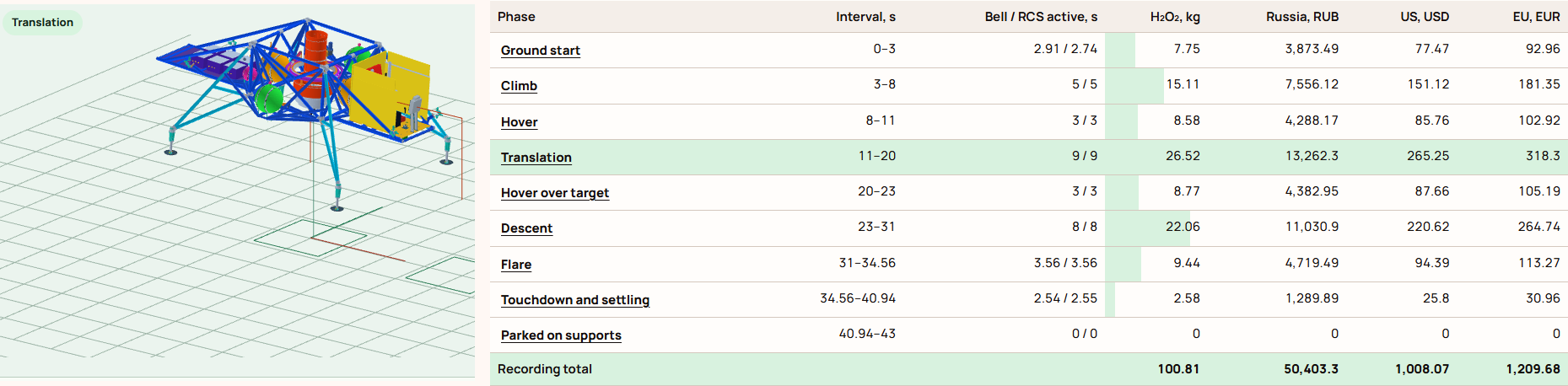
Baseline scenario. Illustrative rates: 500 RUB/kg, 10 USD/kg and 12 EUR/kg.
Active time counts simulated group thrust above 1 N. Bell and RCS can overlap. The recording has one H₂O₂ mass for both groups. Phase use is the decrease in solution mass in the tanks. Cost is usage times the market rate. Helium is calculated separately on sheet 26.
Phases use the labels in the simulation record. The diagram shows branch activity based on thrust. Sheet 24 pressure values come from historical sources. Checks and source data · Lesson replay moments