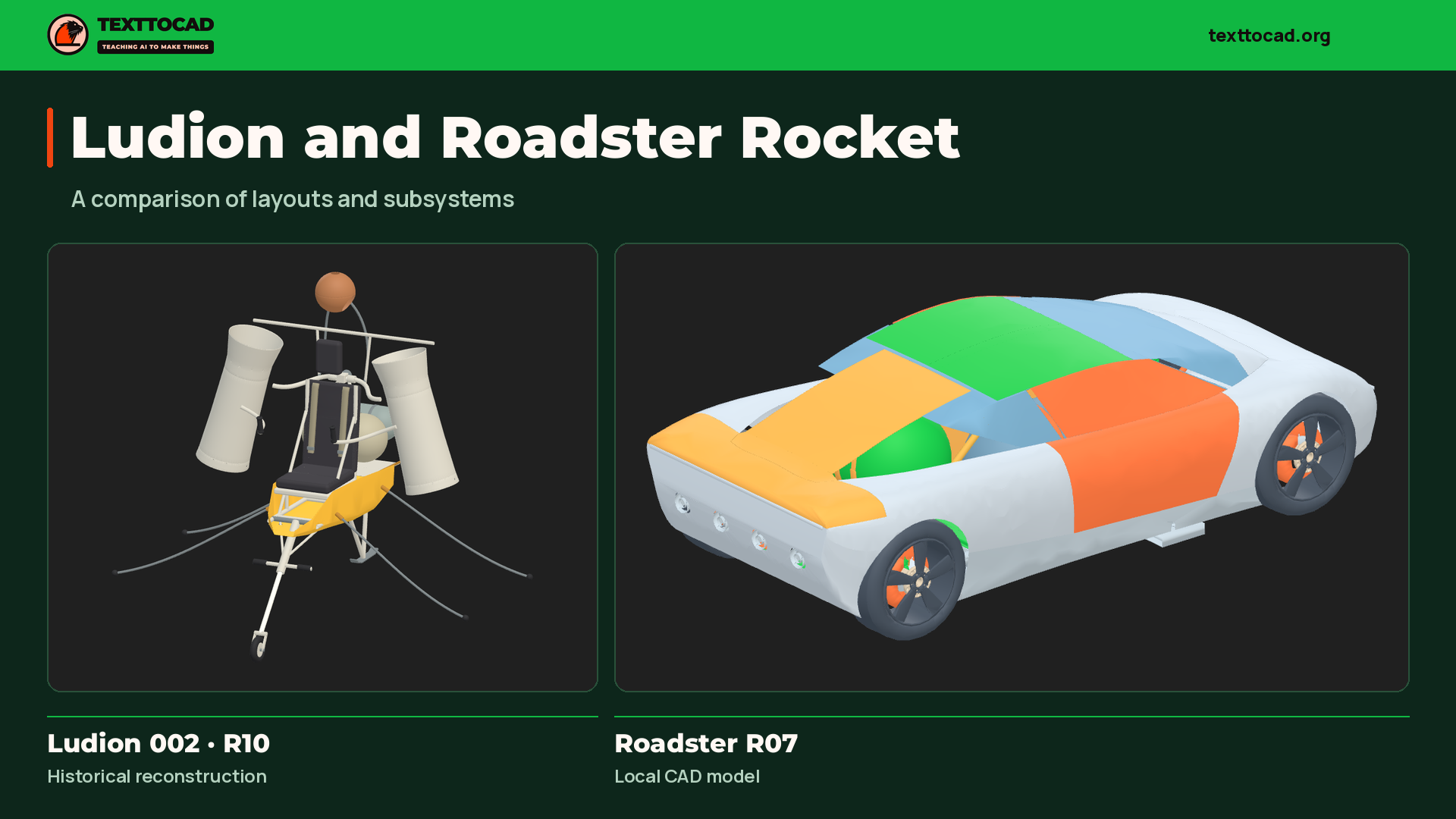
Ludion R8 · digital profile
All three variants share the endpoint of 190 m / 32 s. Specific potential energy g·h covers only elevation gain. Consumption and whole-attempt energy remain open.
History, motion and evidence
A comparison of a short free flight in 1968 and modern footage of aerial manoeuvres. The LLTV method puts support, measurement bounds and completion criteria on the same footing.
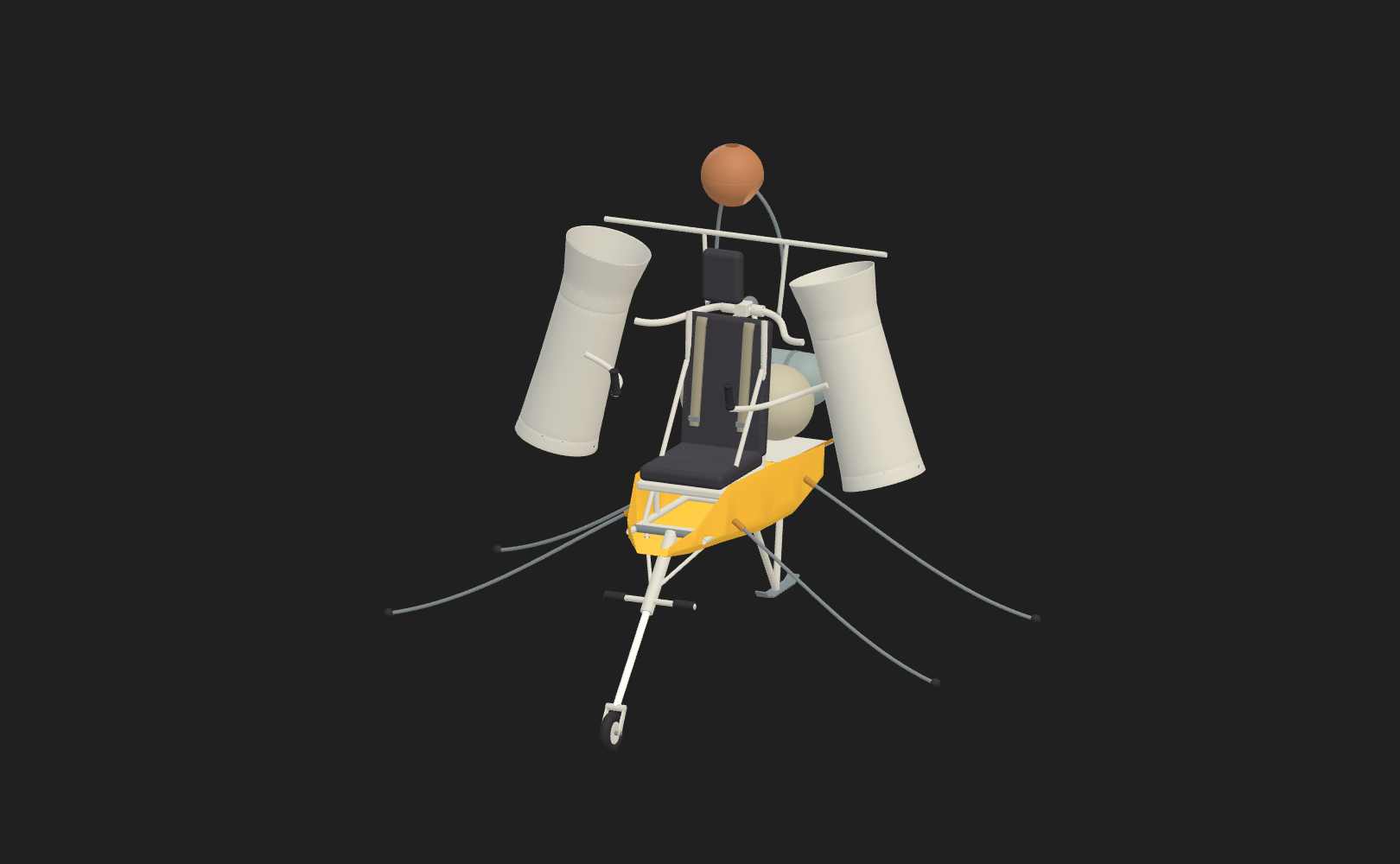

| Criterion | Ludion 002 / R8 | Tesla / R07 / DEV25 |
|---|---|---|
| Initial support | Ground supports. The programme included tethered tests and free flight. | Ramp or pad depending on the clip. The entry phase is recorded separately. |
| Source of force | The S.178 generates a hot flow. Two ejectors entrain outside air and direct the mixed flow downward. | Support and attitude changes are visible in the video. The contribution of each subsystem requires measurements. |
| Phases and manoeuvres | Rothmund describes free translation. Ascent, transfer and descent in R8 are prescribed. | Ramp G2+A1 · Kickflip A1+A2 with inversion · Encore A1+A2. |
| Touchdown and stop | Comparison requires contact speeds, angles and support loads. They are unknown for this flight. | The clips obscure first contact. DEV25 has 0 accepted out of four in its main 5 m series. Four of five isolated mechanical states met the hold criterion. |
| Resource and cost | The published account identifies isopropyl nitrate and a 30 L reserve. Consumption on this flight is unknown. | Actual energy, replenishment and attempt cost are unknown. The calculator covers digital and inert scenarios. |
Sources differ on headwind during the 190 m flight. Rothmund gives 20 km/h and AAMS gives 2 kn. The 59 km/h figure lacks a consistent phase and measurement basis and is excluded from the shared calculation.
Select an R8 height or a clip. The left graph shows a prescribed digital trajectory. The right chart shows the four marks used for the clip interval.
All three variants share the endpoint of 190 m / 32 s. Specific potential energy g·h covers only elevation gain. Consumption and whole-attempt energy remain open.
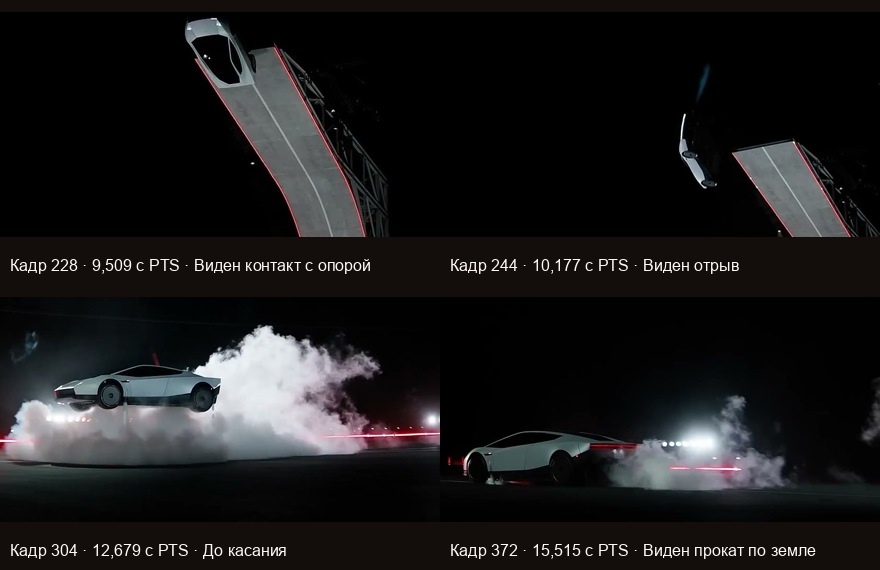
The archived LLTV evidence sheet retains its original Russian annotations. English labels are shown above. The intervals use integer ticks; rounding individual marks can differ by 1 ms.
The green interval connects clear airborne frames. The whole strip gives the upper bound. Reading it as physical time requires 1× playback.
Source clipOrbit, system isolation, smooth separation and static views.
3D · RU3D · ENRelease cover · PNGStep-by-step adaptation, comparison rules and evidence sheets.
DOCX · ENPDF · ENDigital and inert exhibition scenarios, fleet size and cost per attempt. Open inputs for actual expenses.
Open calculatorXLSXAircraft overview and a technical review of the evidence.
Overview · MP4Technical walkthrough · MP4Data files, launch instructions and release hashes.
Interactive checklistLaunch and verificationJSONCSVSHA-256Ludion documentation, Tesla publications and local R07 / DEV25 revisions describe distinct objects. The ledger labels the status of each value, and the provenance file identifies digital inputs.