
Evidence and calculations · TURBOLET / Roadster Rocket
Release R1 · 21 November 2026. The comparison records observations, manufacturer statements, historical reports, and numerical results with their own source and configuration. Empty numeric CSV cells represent unknown values. Case passports and checksums · Source register · Contact markers · Metrics and resource accounting · Task classes G1–A7
1. Case passports
| Case | Evidence available | Principal OPEN items |
|---|---|---|
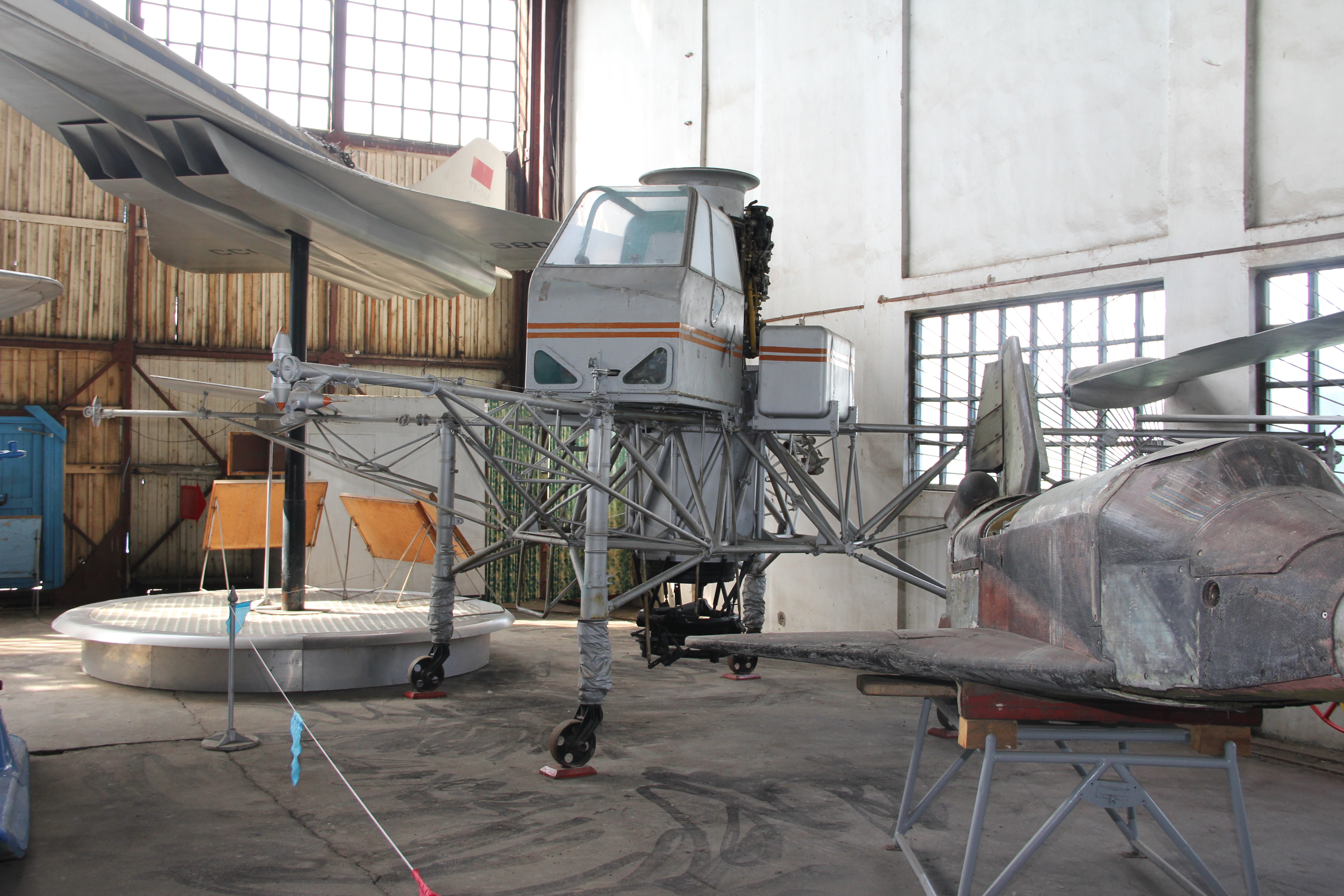
| TURBOLET, Monino, 30 May 2013 | Museum photograph by Clemens Vasters and R5 geometry. The model includes work on the landing gear details, aerodynamic surfaces and wiring. The exact saved R5 first opened in a separate FreeCAD 1.1.4 process, PID 37000, with 2,992 visible solids. | Independent dimensions, tail arrangement on the reference date, engine identification, original wiring and pinout. |
| TURBOLET, 1956–1957 test rig | A. A. Simonov lists 2,340 kg with 350 kg of fuel, dimensions of 10 × 10 × 3.8 m and a 3.6 m landing-gear base. He gives engine ratings of 2,150 and 2,835 kgf and identifies the engine as RD-9BL. | Actual mass and CG for a given sortie, installed thrust, controls, trajectory and weather. |
| TURBOLET, Tushino, 20 July 1958 | Yuri Garnaev's public flying display. A museum archive photograph and British Pathé shot list provide independent visual records. | Exact engine, operating loads and fuel, and a continuous time-referenced view from departure to first contact. |
| TURBOLET, R4/M5 | Replayed illustrative model with R4 geometry, an assumed mass of 2,300 kg, and an assumed 30 kN thrust limit. | Applicability to historical control, thermal conditions and structural or flight qualification. |
| Tesla Roadster, public demonstration | Manufacturer presentation dated 15 October 2026. Selected public frames show supported motion, clearance, a short airborne segment, and subsequent rolling. | Physical timescale, mass, CG, actual gas depletion, pre- and post-run absolute pressure and temperature, and measured recharge energy. |
| Roadster Rocket, local R5/C6I | Snapshot from 19 November 2026. Four numerical cases. Eight source result/trace hashes verified. Operating mass before gas is 3,311.928 kg. The accepted full-cycle count is 0/4. | Hardware pressure qualification, instrumented flight, grid energy, and validated full-cycle repeatability. |
The AMNIT exhibit entry calls the engine RD-9BP and gives a rounded 2.8 tonnes-force. The serial number and engine version for the specific demonstration remain open. Simonov reports 38 free flights by autumn 1957, around six minutes per sortie, typical operating heights up to 3 m, and one flight reaching about 80 m. His summary provides no time series defining contact or hover. The Pathé catalogue lists four shots of takeoff and flight. Its 6 August 1958 date refers to receipt of the material. AMNIT exhibit · Simonov, pp. 10–14 · Tushino photograph · British Pathé
2. Force balance, flow paths and calculation replay
The right-handed frame uses +X forward, +Y left and +Z up. Forces act on the vehicle. Positive rotation about +Y is nose-down. Sum moments about the CG as the cross products of lever arms and forces, plus any applied couples. The historical CG and force allocation remain open.
| Historical publication value | Rating | SI force | Rating divided by 2,340 kg vehicle weight | Aligned-force difference |
|---|---|---|---|---|
| Nominal engine rating | 2,150 kgf | 21.084 kN | 0.919 | −1.863 kN |
| Maximum engine rating | 2,835 kgf | 27.802 kN | 1.212 | +4.854 kN |
The weight is 22.948 kN at standard gravity, 9.80665 m/s². The last column assumes perfect vertical alignment. Engine ratings leave installed vertical thrust, extraction losses, vector angles and achievable moments open. The patent describes main thrust through the exhaust path and a compressor-bleed branch to reaction controls. Internal forces enter the resultant once. Flow rate, pressure, temperature, hot-gas ingestion and ground effects remain open. Force chart · Force and flow diagrams · SU120735A1


The separate R4/M5 calculation replay used 9,001 samples at 0.02 s and a repeat at 0.01 s. The maximum model CG rise is 3.535 m and the maximum trajectory difference on halving the step is 0.00920 m. The scenario includes linear drag, a modelled gust from 136 to 140 s, a simplified flat contact plane and an assumed thrust deduction for bleed. Fuel depletion, impact dynamics, heat transfer and CFD were outside its equations. The time-step comparison checks numerical reproducibility. Model replay chart · Replay data

3B. Contact events, resources and turnaround
For video, record the last supported frame, first clearly separated frame, last clearly separated frame and first visible return to support. The inner two marks give the lower bound. The outer two give the upper bound. The three primary presets come from the exact frame ticks in the original method's calculator. The CSV also preserves two earlier sets of marks separately. PTS is playback time in the selected clip. Physical time and the obscured instant of first contact remain open.
| Case | Time in the stated clock | Boundary |
|---|---|---|
| Tushino, 1958 | OPEN | No paired contact markers or continuous time-calibrated view. |
| Tesla Ramp | 2.502500–6.006000 s PTS | A supported inversion and a separate ramp-release segment. Exact contact is obscured. |
| Tesla Kickflip | 2.877875–5.505500 s PTS | A short reorientation segment. The cloud obscures first contact. |
| Tesla Encore | 2.544208–5.755750 s PTS | Clearance and return to ground motion. Initial speed and exact first contact remain open. |
| C6I N₂ nominal | 2.603–2.609 s model time | First numerical contact at a CG vertical speed of −6.733 m/s. Full cycle open. |
| C6I N₂ adverse | 2.381–2.388 s model time | First numerical contact at −8.816 m/s. Full cycle open. |
| C6I Air nominal | At least 1.330 s of the recorded model segment | Simulation stopped before confirmed apex or contact. |
| C6I Air adverse | At least 0.800 s of the recorded model segment | Simulation stopped before confirmed apex or contact. |
Manufacturer's event date · Ramp · Kickflip · Encore · Exact time markers
The historical 350 kg figure is fuel carried in a reference weight, with fuel consumed on the specific sortie still open. Public Tesla gas depletion is also open. In local C6I Air nominal, 100.594 kg left the total gas circuit and the storage vessels lost 100.690 kg. The reversible vessel restoration estimate is 13.386 kWh for Air nominal and 13.595 kWh for Air adverse. Both estimates cover a recorded model segment. Grid energy, traction-battery reset, ancillary loads, restoration time and the cost of a successful operation remain open.
Evaluate a common A3 task with a level start, held position and height under defined tolerances, and controlled contact. Accounting includes each attempt and each restoration step, in a consistent initial and final state, before dividing campaign cost by successful cycles. These sources yield no qualified common A3–A7 cycle or cross-platform operating-cost ranking. Resource worksheet · Task matrix
Reproduction
Run python -X utf8 -B build_evidence.py with NumPy and Matplotlib. It verifies local source hashes, repeats the two M5 time steps, and regenerates the shared evidence tables and bilingual charts. Archive footage remains linked at its source. Evidence build script · Russian evidence index